
 |
 |
 |
 |
 |
 |
 |
 |
 |

 |
Japanese whalers set sail: Greenpeace
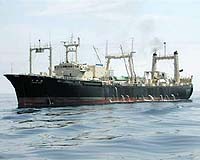
Tokyo (AFP) Nov 17, 2008 Japan's whaling fleet set sail Monday, environmentalists said, apparently on an annual Antarctic hunt likely to provoke fresh friction with anti-whaling countries such as Australia. Greenpeace said its activists saw the whalers depart from a port in western Hiroshima prefecture waved off by their families and whaling officials. The Fisheries Agency and the operator of the factory ship refused to confirm whether the fleet had left on its annual five-month Antarctic voyage, which last year departed on November 18. "We cannot disclose any information on its departure out of consideration for the safety of the crew," said a spokesman for boat operator Kyodo Senpaku. Greenpeace said the fleet left from a pier on Innoshima island, instead of its usual departure point of Shimonoseki, led by the 8,000-tonne "Nisshin Maru" factory ship. "The fleet attempted to leave Japan quietly," a Greenpeace statement said. During the last Antarctic hunt, activists from the US-based Sea Shepherd Conservation Society tracked down and hurled bottles of chemicals at the fleet in an attempt to disrupt operations, leading Japan to label them "terrorists." Greenpeace also denounced the hunt but decided not to chase the whalers this year as it fights to clear two activists being prosecuted in Japan on charges of stealing whale meat during an investigation into alleged corruption. Japan aims to kill 1,000 whales a year using a loophole in a 1986 global whaling moratorium that allows "lethal research" on the ocean giants. Tokyo says whaling is part of its culture but makes no secret the meat ends up on dinner tables. It argues that Western opponents of whaling, led by Australia, are insensitive to Japan's culture of whaling. But few Japanese eat whale on a regular basis and surveys show that many young people are questioning the hunt. As the Japanese whalers apparently set off, Australia unveiled a four-million-dollar (2.58-million US) scientific research programme aimed at persuading Japan that it is not necessary to kill the mammals to study them. The funding for the Australian programme will be used for research and scientific partnerships with other nations -- including Japan -- which will be invited to join the non-lethal research programme. The package also includes money to develop commercial whale watching in the Pacific and an independent assessment of Japan's whaling programme. "Australia does not believe that we need to kill whales to understand them," Environment Minister Peter Garrett told reporters in Sydney. Japan's Fisheries Agency said Tokyo already has a non-lethal research programme jointly with the International Whaling Commission (IWC). "We cannot really tell what Australia's intention is," agency official Shigeki Takaya told AFP. "We have done non-lethal research for some 20 years jointly with the IWC. "Japan does not reject non-lethal research but also conducts lethal studies for data that can be only obtained through lethal programmes," he said. Last season, Japan caught 551 whales in the northwest Pacific and Antarctic oceans, just over half its target, due to harassment by Sea Shepherd activists, who have vowed again to physically stop the Japanese whalers. Sea Shepherd captain Paul Watson said last week Hollywood star Daryl Hannah would join the militant conservationist group's ship, "Steve Irwin," for a looming confrontation with Japan's whalers in the Antarctic. Japanese officials said last week the whaling fleet would again spare humpback whales from the Antarctic hunt this season. Japan last season initially planned to cull 50 humpbacks, enraging Australia, where whales are a major tourist attraction. Tokyo suspended its plan at the last minute. Share This Article With Planet Earth
Related Links Follow the Whaling Debate
 Australia launches anti-whaling drive
 Sydney (AFP) Nov 17, 2008
Australia unveiled Monday a multi-million-dollar scientific research programme aimed at persuading Japan that it is not necessary to kill the mammals in order to study them. |
|
|

| The content herein, unless otherwise known to be public domain, are Copyright 1995-2007 - SpaceDaily.AFP and UPI Wire Stories are copyright Agence France-Presse and United Press International. ESA Portal Reports are copyright European Space Agency. All NASA sourced material is public domain. Additional copyrights may apply in whole or part to other bona fide parties. Advertising does not imply endorsement,agreement or approval of any opinions, statements or information provided by SpaceDaily on any Web page published or hosted by SpaceDaily. Privacy Statement |
 del.icio.us
 Digg
Digg Reddit
 YahooMyWeb
 Google
 Facebook