
 |
 |
 |
 |
 |
 |
 |
 |
 |

 |
Lagos megacity: facelifting a slum
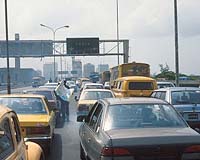
Lagos (AFP) March 27, 2009 The first thing that used to hit visitors to Nigeria's commercial hub was a gridlock of rusty yellow buses and the tumbledown stalls of the vast Oshodi market -- the whole amid the unrelenting din of horns, sirens and vendors. "The first thing they see upon arrival is Oshodi," the governor of Lagos state Babatunde Fashola once remarked of the sprawling network minutes from the airport along the main road into the city. "I don't think as an investor I would want to come back once I see that chaos." For Fashola, Oshodi was "the shame of a nation and the shame of a state". Now the chaos of Oshodi is no more. Lagos, Nigeria's most populous city with somewhere between 15 and 17 million people, has decided to overhaul its image. Fashola, a lawyer, likes to tell how a trip he made to Singapore before becoming governor in 2007 gave him a model on which to base his transformed megacity. Focus has been put on revamping the transportation and road sector, improving waste management and water provision, property development and the environment. The plan will not come cheap in this country still ranked among the world's 20 poorest nations despite its place as the world's eighth largest oil producer. Plans are to fund the revamp through public-private sector partnership, bond issue and borrowing. Lagos state government last year issued a bond of 50 billion naira (340 million dollars, 250 million euros) in the capital market, while banks have pledged around one billion dollars in loans and advances. It hopes to raise between 250 and 275 billion naira in bonds in the coming years, but the global economic downturn could make that plan unfeasible. -- 'I have been deprived of my means of livelihood' -- ------------------------------------------------------ But the biggest challenge appears to be power supply. Despite its oil wealth Nigeria is desperately short of electricity, producing around 3,000 megawatts of electricity for a population of 140 million people. By comparison, South Africa produces 13 times more electricity for a population one third the size of Nigeria's. Nigerian factories, hospitals, businesses, homes are all run on individual diesel-run generators, rattling and belching out smoke. Lagos has started to experiment with green energy, installing solar-powered street lights and security cameras. Notorious for its traffic jams dubbed "go slows", Lagos' highways are up for expansion. Roads get cleaned daily these days, potholes are being filled up. Garbage gets collected, though still not often enough, and vacant lots where youths played football among mounds of trash and herds of scrawny goats are turning into lush green parks. Traders who had pitched their makeshift stall along the railway tracks have been kicked off, and gone are the shanties and rusty corrugated sheets that used to serve as cover for criminal gangs. Those who were evicted are not happy about the reforms but are mostly resigned. "I have been deprived of my means of livelihood. My shop was razed without them providing an alternative," said textile trader Muina Adaranijo. At Marina, Lagos' central business district that houses banks and major companies, a special police unit patrols the streets. Kayode Opeifa, special adviser on transportation says more than 200 red-and-blue modern commuter buses are plying the Lagos roads as part of the Bus Rapid Transit (BRT) programme. "We have created designated routes for the buses to ensure fast and efficient transportation system," he said. Opeifa said government plans to construct a light rail road system as well as start ferry services. There are even plans to turn the Bar Beach waterfront, a former execution ground beloved of religious sects, into a Dubai-style luxury development. Share This Article With Planet Earth
Related Links Africa News - Resources, Health, Food
 DR Congo deal is a step on way to peace in the east
 Kinshasa (AFP) March 26, 2009
A new peace deal in Democratic Republic of Congo meets key demands of Tutsi rebels who started fighting six years ago for political recognition and claimed their minority was violently threatened. |
|
|

| The content herein, unless otherwise known to be public domain, are Copyright 1995-2007 - SpaceDaily.AFP and UPI Wire Stories are copyright Agence France-Presse and United Press International. ESA Portal Reports are copyright European Space Agency. All NASA sourced material is public domain. Additional copyrights may apply in whole or part to other bona fide parties. Advertising does not imply endorsement,agreement or approval of any opinions, statements or information provided by SpaceDaily on any Web page published or hosted by SpaceDaily. Privacy Statement |
 del.icio.us
 Digg
Digg Reddit
 YahooMyWeb
 Google
 Facebook