
 |
 |
 |
 |
 |
 |
 |
 |
 |

 |
Leap Second Will Be Added To Clocks On NYE
Washington DC (SPX) Dec 09, 2008 On December 31, 2008 a "leap second" will be added to the world's clocks at 23 hours, 59 minutes and 59 seconds Coordinated Universal Time (UTC). This corresponds to 6:59:59 pm Eastern Standard Time, when the extra second will be inserted at the U.S. Naval Observatory's Master Clock Facility in Washington, DC. This marks the 24th leap second to be added to UTC, a uniform time-scale kept by atomic clocks around the world, since 1972. Historically, time was based on the mean rotation of the earth relative to celestial bodies and the second was defined in this reference frame. However, the invention of atomic clocks defined a much more precise "atomic time" scale and a second that is independent of the earth's rotation. In 1970, an international agreement established two timescales: one based on the rotation of the earth and one based on atomic time. The problem is that the earth's rotation is very gradually slowing down, which necessitates the periodic insertion of a "leap second" into the atomic timescale to keep the two within 1 second of each other. The International Earth Rotation and Reference Systems Service (IERS) is the organization which monitors the difference in the two timescales and calls for leap seconds to be inserted or removed when necessary. Since 1972, leap seconds have been added at intervals varying from six months to seven years, with the last being inserted on December 31, 2005. The U.S. Naval Observatory is charged with the responsibility for the precise determination and dissemination of time for the Department of Defense and maintains its Master Clock. The U.S. Naval Observatory, together with the National Institute of Standards and Technology (NIST), determines time for the United States. Modern electronic navigation and communications systems depend increasingly on the dissemination of precise time through such mechanisms as the Internet-based Network Time Protocol (NTP) and the satellite-based Global Positioning System (GPS). The U.S. Naval Observatory is the largest single contributor to the international time scale (UTC), which is computed in Paris, France, at the International Bureau of Weights and Measures. This international prominence in atomic timekeeping is due to the sheer number of atomic clocks operated by the Observatory and the fidelity to which they are maintained. Moreover, the U.S. Naval Observatory's principal role in keeping track of changes in the "Earth clock" (i.e., Earth rotation) and its dissemination of this information as the Rapid Service/Prediction Center for the IERS attests to the fact that globally, as well as nationally, the U.S. Naval Observatory remains the leader in precise time. Share This Article With Planet Earth
Related Links U.S. Naval Observatory Understanding Time and Space
 Spectratime Awarded Contract To Supply Rubidium Space Clocks To IRNSS
 Neuchatel, Switzerland (SPX) Sep 16, 2008
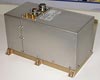
SpectraTime has announced the award of a contract valued at approximately EUR 4 million to supply Rubidium Space Clocks to the Indian Regional Navigational Satellite System (IRNSS). |
|
|

| The content herein, unless otherwise known to be public domain, are Copyright 1995-2007 - SpaceDaily.AFP and UPI Wire Stories are copyright Agence France-Presse and United Press International. ESA Portal Reports are copyright European Space Agency. All NASA sourced material is public domain. Additional copyrights may apply in whole or part to other bona fide parties. Advertising does not imply endorsement,agreement or approval of any opinions, statements or information provided by SpaceDaily on any Web page published or hosted by SpaceDaily. Privacy Statement |
 del.icio.us
 Digg
Digg Reddit
 YahooMyWeb
 Google
 Facebook