|
 |
 |
 |
 |
 |
 |
 |
 |

 |
Making Sense Of Arms Control Part Two
Moscow (UPI) Dec 21, 2007 These two propaganda cliches (about "NATO's aggressive designs" and the "Russian menace") are a far cry from reality, but very large sections of the population and political elites in Russia and the West take them seriously. What is more, these cliches feed one another, turning the deterioration in relations into a self-sustaining downward spiral. There is also something paradoxical about the current treaties. Having been signed in the era of the nearly finished but still continuing Cold War, they are based on the premise of East-West confrontation. The preservation of these treaties only fuels this confrontation, and their breaking hence breeds new suspicions. There is nothing to replace them, and the mentality of the sides remains the same. It is clear that the main problem is mentality. The sides must stop thinking in last century cliches. Russia must no longer regard the West as a "global spy ring" nurturing plots against Russia and seeking its natural resources. The West must recognize that Russia has interests beyond its borders and stop seeing in it a brute aggressive force bent on subjugating the surrounding countries and nations. And vice versa. A country opposed to Russia should not be viewed as a "lighthouse of democracy" deserving to be supported at all costs. If this shift in attitudes could be accomplished, the need for arms-restricting treaties would simply fade away. But mentality is the hardest thing of all to change -- especially if the two sides not only lack the will to get rid of their ideological cliches, but, on the contrary, seek to refurbish and renew them. What is more, the ruling regimes in Russia and some East European and CIS countries make effective use of such cliches to buttress their hold on power. In such circumstances, the wisest course would be to review all existing treaties in line with the new realities. Moscow and Washington have already made a very reasonable proposal -- to apply the INF treaty, on intermediate-range nuclear weapons, to all countries. As for the treaty on Conventional Forces in Europe, a new agreement is in order here, one that would set a ceiling on arms and military equipment for NATO, regardless of the number of its signatories. A good idea would be to lower the quotas for all countries, whether or not they are signatories to the original or adapted version of the CFE. Considering that none of the CFE signatories (aside from Azerbaijan) has reached its quota, their reduction is unlikely to be a problem. (Alexander Khramchikhin is head of analysis at the Institute of Political and Military Analysis. The opinions expressed in this article are the author's and do not necessarily represent those of RIA Novosti.)
Email This Article Comment On This Article Related Links Learn about missile defense at SpaceWar.com Learn about nuclear weapons doctrine and defense at SpaceWar.com All about missiles at SpaceWar.com Learn about the Superpowers of the 21st Century at SpaceWar.com
 Nuclear India moves closer to missile defence shield
 New Delhi (AFP) Dec 21, 2007
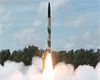
India announced Friday a final successful test of the surface-to-air Akash missile before starting mass production under an ambitious plan to build a national missile defence shield. |
|
|
| The content herein, unless otherwise known to be public domain, are Copyright Space.TV Corporation. AFP and UPI Wire Stories are copyright Agence France-Presse and United Press International. ESA Portal Reports are copyright European Space Agency. All NASA sourced material is public domain. Additional copyrights may apply in whole or part to other bona fide parties. Advertising does not imply endorsement, agreement or approval of any opinions, statements or information provided by Space.TV Corp on any Web page published or hosted by Space.TV Corp. Privacy Statement |