
 |
 |
 |
 |
 |
 |
 |
 |
 |

 |
Malaysian Satellite Arrives At Marshall Islands Launch Site
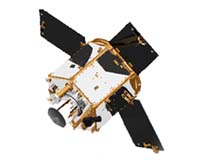
Kuala Lumpur, Malaysia (XNA) Mar 24, 2009 RazakSAT had arrived at Omelek Island in the Republic of Marshall Islands in the Pacific Ocean from where it will be launched into orbit on April 21, Astronautic Technology (ATSB) chief executive officer Ahmad Sabirin Arshad said in Shah Alam, capital of Malaysian central Selangor state on Monday. RazakSAT was flown in a Royal Malaysian Air Force (RMAF) Hercules C130 aircraft from the Subang airbase last Saturday and arrived at Kwajalein Island in the Republic of Marshall Islands, he said at a news conference. The satellite, designed and manufactured by ATSB, was then sent to Omelek Island by Great Bridge, a transport craft of the United States Navy, he said. The six engineers who had gone along with the satellite would unload the satellite support equipment as well as the satellite for tests, he said. On March 31, two other satellites - InnoSAT and CubeSAT - would be installed in the capsule carrying RazakSAT for the launch. CubeSAT was developed by ATSB while three Malaysian universities developed InnoSAT. RazakSAT and its support equipment had been insured for 8 million U.S. dollars, Ahmad said.
Source: Xinhua News Agency Share This Article With Planet Earth
Related Links Astronautic Technology Launch Pad at Space-Travel.com
 NMSU Students Launch Experiments Into Space From Spaceport America
 Las Cruces NM (SPX) Mar 24, 2009
Spaceport America and the New Mexico Spaceport Authority are developing a program that will allow New Mexico students annual access to space. |
|
|

| The content herein, unless otherwise known to be public domain, are Copyright 1995-2007 - SpaceDaily.AFP and UPI Wire Stories are copyright Agence France-Presse and United Press International. ESA Portal Reports are copyright European Space Agency. All NASA sourced material is public domain. Additional copyrights may apply in whole or part to other bona fide parties. Advertising does not imply endorsement,agreement or approval of any opinions, statements or information provided by SpaceDaily on any Web page published or hosted by SpaceDaily. Privacy Statement |
 del.icio.us
 Digg
Digg Reddit
 YahooMyWeb
 Google
 Facebook