
 |
 |
 |
 |
 |
 |
 |
 |
 |

 |
Massive emissions cuts can save Arctic ice: study
Washington (AFP) April 14, 2009 Cutting greenhouse gases by 70 percent this century would spare the planet the most traumatic effects of climate change, including the massive loss of Arctic sea ice, a study said Tuesday. Warming in the Arctic would be almost halved, helping preserve fisheries, as well as sea birds and Arctic mammals like polar bears in some regions, including the northern Bering Sea, according to scientists at the National Center for Atmospheric Research (NCAR). But the massive cuts of greenhouse gas emissions advocated by the researchers would only "stabilize the threat of climate change and avoid catastrophe," said NCAR scientist Warren Washington, the study's lead author. The cuts would also prevent huge losses of permafrost and a significant rise in the sea level, said the study to be published next week in Geophysical Research Letters. "This research indicates that we can no longer avoid significant warming during this century," said Washington, who ran a series of global supercomputer studies. The planet's average temperatures have warmed by nearly one degree Celsius (1.8 degrees Fahrenheit) since the pre-industrial era. Most of the warming is due to emissions from greenhouse gases, chief among them carbon dioxide, the study noted. Those gases have increased from a pre-industrial level of about 284 parts per million (ppm) in the atmosphere to more than 380 ppm today. Recent studies have found that temperatures would reach the threshold for dangerous climate change if they rise by an additional one degree Celsius. If carbon dioxide emissions were to plateau and maintained at 450 ppm -- cited as an attainable target by the US Climate Change Science Program if dramatic emissions cuts are enacted -- global temperatures would rise by 0.6 degrees Celsius (one degree Fahrenheit) by the end of the century, the study said. But if emissions were allowed to continue their current trend, temperatures would rise by almost four times that amount, to 2.2 degrees Celsius (four degrees Fahrenheit). The researchers pointed to several major benefits from cutting carbon dioxide emissions. Holding emissions at 450 ppm would translate to sea levels rising by 14 centimeters (5.5 inches) instead of 22 centimeters (8.7 inches) due to thermal expansion. Arctic ice volume would shrink by almost a quarter in summertime and stabilize by 2100, rather than shrinking at least by three-quarters and continuing to melt. The researchers also found that the climate system would stabilize by about 2100, rather than continuing to warm. "This study provides some hope that we can avoid the worst impacts of climate change--if society can cut emissions substantially over the next several decades and continue major cuts through the century," Washington said. European Union nations have agreed to cut their greenhouse gas emissions by 20 percent by 2020 from 1990 levels, rising to 30 percent if the rest of the developed world -- mainly the United States and Japan -- agrees to follow suit. During the 2008 US presidential campaign, Barack Obama vowed to match the European Union's mid-century objectives of cutting CO2 emissions by 80 percent. But as president, Obama has offered a more modest goal for 2020 of returning the United States to 1990 level emissions, a reduction of about 14 percent from current levels. Obama's promise of a leading US role on climate change broke with his predecessor George W. Bush's stance, which had long frustrated Washington's EU partners. Share This Article With Planet Earth
Related Links Beyond the Ice Age
 Artic ice thinner than ever: scientists
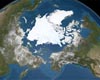 Washington (AFP) April 6, 2009
The Arctic ice cap is thinner than ever, satellite observations revealed Monday, while also indicating that the sea ice cover continues to shrink due to global warming. |
|
|

| The content herein, unless otherwise known to be public domain, are Copyright 1995-2007 - SpaceDaily.AFP and UPI Wire Stories are copyright Agence France-Presse and United Press International. ESA Portal Reports are copyright European Space Agency. All NASA sourced material is public domain. Additional copyrights may apply in whole or part to other bona fide parties. Advertising does not imply endorsement,agreement or approval of any opinions, statements or information provided by SpaceDaily on any Web page published or hosted by SpaceDaily. Privacy Statement |
 del.icio.us
 Digg
Digg Reddit
 YahooMyWeb
 Google
 Facebook