|
 |
 |
 |
 |
 |
 |
 |
 |

 |
Microbes As Climate Engineers
Edinburgh, UK (SPX) Jan 31, 2008 We might think we control the climate but unless we harness the powers of our microbial co-habitants on this planet we might be fighting a losing battle, according to an article in the February 2008 issue of Microbiology Today. Humans are continually altering the atmosphere. "Arrogant organisms that we are, it is easy to view this as something entirely novel in Earth's history," says Dr Dave Reay from the University of Edinburgh. "In truth of course, micro-organisms have been at it for billions of years." Humans affect the atmosphere indirectly by their activities. Most human-induced methane comes from livestock, rice fields and landfill: in all of these places, microbes are actually responsible for producing the methane, 150 million tonnes a year. Microbes in wetlands produce an additional 100 million tonnes and those that live inside termites release 20 million tonnes of methane annually. 90 billion tonnes of carbon a year is absorbed from the atmosphere by the oceans, and almost as much is released; microbes play a key role in both. On land, a combination of primary production, respiration and microbial decomposition leads to the uptake of 120 billion tonnes of carbon every year and the release of 119 billion tonnes. "The impact of these microbially-controlled cycles on future climate warming is potentially huge," says Dr Reay. By better understanding these processes we could take more carbon out of the atmosphere using microbes on land and in the sea. Methane-eating bacteria can be used to catch methane that is released from landfill, Cyanobacteria could provide hydrogen fuel, and plankton have already become a feedstock for some biofuels. "Microbes will continue as climate engineers long after humans have burned that final barrel of oil. Whether they help us to avoid dangerous climate change in the 21st century or push us even faster towards it depends on just how well we understand them." Community Email This Article Comment On This Article Related Links Society for General Microbiology Climate Science News - Modeling, Mitigation Adaptation
 Economists Help Climate Scientists To Improve Global Warming Forecasts
 Paris, France (SPX) Jan 29, 2008
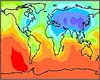
Climate scientists are collaborating with experts in economic theory to improve their forecasting models and assess more accurately the impact of rising atmospheric carbon dioxide levels. Although there is broad consensus that there will be a significant rise in average global temperature, there is great uncertainty over the extent of the change, and the implications for different regions. |
|
|
| The content herein, unless otherwise known to be public domain, are Copyright Space.TV Corporation. AFP and UPI Wire Stories are copyright Agence France-Presse and United Press International. ESA Portal Reports are copyright European Space Agency. All NASA sourced material is public domain. Additional copyrights may apply in whole or part to other bona fide parties. Advertising does not imply endorsement, agreement or approval of any opinions, statements or information provided by Space.TV Corp on any Web page published or hosted by Space.TV Corp. Privacy Statement |