
 |
 |
 |
 |
 |
 |
 |
 |
 |

 |
Milky Way bigger, denser than thought
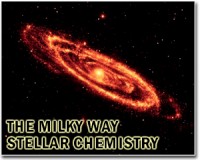
Long Beach CA (UPI) Jan 5, 2009 The Milky Way galaxy is 15 percent larger and 50 percent denser than scientists previously thought, findings presented in California Monday found. The findings, presented at the American Astronomical Society's convention in Long Beach, suggest the Earth's home galaxy is about the same size and mass as the neighboring Andromeda Galaxy, some 2.5 million light-years away, said study author Mark Reid of the Harvard-Smithsonian Center for Astrophysics in Cambridge, Mass. "No longer will we think of the Milky Way as the little sister of the Andromeda Galaxy in our Local Group family," Reid said. They are now more like fraternal twins, he said. A larger, denser Milky Way means the gravity between the galaxies is stronger than thought, suggesting they could crash into each other sooner than scientists predicted -- but a collision would still be 2 to 3 billion years from now, Reid said. The Milky Way is also spinning around its center at about 568,000 mph, rather than the 492,000 mph scientists believed, Reid said. The earth's solar system, about 28,000 light-years from the galaxy's center, is moving at about 600,000 mph, up from the previously estimated 500,000 mph, Reid said. His presentation coincided with the release of a separate report showing the Milky Way's inner galaxy has two weaker arms, not just one, in addition to its two primary spiral arms. This map -- developed by Martin Pohl of Iowa State University, Peter Englmaier of the Switzerland's University of Zurich and Nicolai Bissantz of Germany's Ruhr University Bochum -- indicates the inner galaxy is symmetrical, Englmaier said. Share This Article With Planet Earth
Related Links Stellar Chemistry, The Universe And All Within It
 NASA launches probe to study edge of solar system
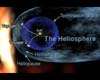 Washington (AFP) Oct 19, 2008
NASA on Sunday launched a probe into orbit high above earth to study the distant edge of the solar system where hot solar winds crash into the cold outer space. |
|
|

| The content herein, unless otherwise known to be public domain, are Copyright 1995-2007 - SpaceDaily.AFP and UPI Wire Stories are copyright Agence France-Presse and United Press International. ESA Portal Reports are copyright European Space Agency. All NASA sourced material is public domain. Additional copyrights may apply in whole or part to other bona fide parties. Advertising does not imply endorsement,agreement or approval of any opinions, statements or information provided by SpaceDaily on any Web page published or hosted by SpaceDaily. Privacy Statement |
 del.icio.us
 Digg
Digg Reddit
 YahooMyWeb
 Google
 Facebook