
 |
 |
 |
 |
 |
 |
 |
 |
 |

 |
Mobile phones fight disease, uncover news in developing lands
Long Beach, California (AFP) Feb 4, 2009 As mobile phones spread rapidly around the world, activists and truth lovers are turning to them as tools for organizing and communicating. Scientists and do-gooders sharing innovations and ideas on Wednesday at a Technology, Entertainment, Design (TED) Conference, repeatedly pointed to mobile phones as weapons in battles for better lives. TED is known for eclectic, brain-stimulating presentations delivered in rapid-fire succession by brilliant, accomplished people. "Technology has gone from something that is intimidating to something that is empowering and liberating," said Infosys co-founder Nandan Nilekani, who is credited with ushering India into the information technology age. "The mobile telephone has become an instrument of empowerment." In conflict-ravaged Gaza, Arab-language TV network Al Jazeera has enlisted fledgling African technology platform Ushadidi to let citizens report happenings. Ushadidi was created in Kenya about a year ago during post-election violence as a "crowd sourcing" mobile telephone platform people could use to report about what was happening in their communities, said co-founder Erik Hersman. The technology spread quickly to the Democratic Republic of Congo, and was put to use by Al-Jazeera beginning last month in Gaza to glean news from citizen journalists, according to Hersman. "If it works in Africa, it will work anywhere," Hersman said. Ushadidi is creating a "crowd-source filter" that uses feedback from readers and contributors to gauge which reports are most believable. "We have the capacity to report eye-witness accounts in real time," Hersman said. "There is information overload. We think we can tap into the crowd to get a better understanding of the probability of something being true." Mobile phones are proliferating at "astounding rates" with an estimated 3.5 billion of them worldwide by the end of 2008, according MobileActive.org, an online organization devoted to using mobile technology for social change. Mobileactive.org has used mobile phones for goals ranging from connecting people during disasters to using computerized smart phones as microscopes for medical research. Organizations have used mobile phones to swing elections through get-out-the-vote activities; monitor voting; send health alerts to dispersed populations; document political abuses, and lobby for environmental laws. Bright Simons co-founded mPedigree, which offers ways to thwart medicine fraud in Africa or India by enabling people to use mobile telephones to check that prescription drugs are authentic. Mobile phone innovations and testimonials came on an opening morning at the TED conference. Brazilian wildlife geneticist Juliana Machado Ferreira told of using forensics to fight poachers, such as the songbird thieves that routinely plunder that nation's forests. "It is like CSI, but for nature," Ferreira said, referring to a popular US detective television series based in the science of solving crimes. "Who says biologists aren't hard-core?" Share This Article With Planet Earth
Related Links Bringing Order To A World Of Disasters A world of storm and tempest When the Earth Quakes
 Snow may be billion-pound loss for British economy: experts
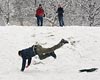 London (AFP) Feb 4, 2009
The snow storms which paralysed Britain may have cost businesses already battling the credit crunch up to a billion pounds, experts said Tuesday -- and more blizzards could be on the way. |
|
|

| The content herein, unless otherwise known to be public domain, are Copyright 1995-2007 - SpaceDaily.AFP and UPI Wire Stories are copyright Agence France-Presse and United Press International. ESA Portal Reports are copyright European Space Agency. All NASA sourced material is public domain. Additional copyrights may apply in whole or part to other bona fide parties. Advertising does not imply endorsement,agreement or approval of any opinions, statements or information provided by SpaceDaily on any Web page published or hosted by SpaceDaily. Privacy Statement |
 del.icio.us
 Digg
Digg Reddit
 YahooMyWeb
 Google
 Facebook