|
 |
 |
 |
 |
 |
 |
 |
 |

 |
Moon Race Motives Part One
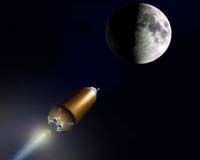
Moscow (UPI) Dec 6, 2007 The Moon theme will continue to dominate in 2008, because space powers now regard it as a priority. The United States, India and Japan will send probes to the Moon. After the Soviet Union and the United States completed their 1960-1970 lunar programs, few flights have been made to the Earth's satellite: these were U.S. craft Clementine (1994) and Lunar Prospector (1998-1999), with Europe's SMART 1 in the new millennium. While, Japan's Kaguya probe and China's Chang'e I have recently reached Lunar orbit. Russia and India have recently signed an agreement on jointly developing and delivering a research craft to the Moon. India will contribute a GSLV launch vehicle and a spacecraft for interplanetary travel and studies of the Moon from orbit. Russia will build a landing module, a lunar rover, and a set of scientific instruments. Practically all leading space powers are planning lunar programs of one sort or another, citing the need to develop lunar resources and establish extra-terrestrial bases for manned interplanetary missions. The Moon is also attractive to fundamental science. It is still not known whether it was formed from a proto-planetary cloud together with our planet, or was shaped from fragments of a large asteroid as it collided with a young Earth. Encrypted in the age and dimensions of the Moon's surface craters is a record of the history of the solar system. One of the most intriguing riddles of contemporary Moon exploration is the presence or absence in the polar regions of so-called "cold traps" -- craters whose bottoms are always shaded from the Sun. The Moon is known to have experienced many collisions with comets. Their evaporation would produce a short-lived atmosphere of water vapor, which would then condense and settle at the bottom of such "cold traps." If there were many such collisions (the history of the solar system is known to have had periods of high cometary activity), then large amounts of water ice could have accumulated over millions of years. It is the search for water on the Moon that will be central to all the world's next space missions. One will be in October 2008 when the United States will launch the Lunar Reconnaissance Orbiter. Its scientific payload includes the Russian-made neutron telescope LEND (Lunar Exploration Neutron Detector). The new device is a modified version of the Russian detector that is installed on the American Odyssey orbiter and has been looking for water on Mars for the past five years. LEND will look for water on the Moon. (Yury Zaitsev is an expert at the Russian Academy of Sciences' Institute of Space Research. This article is reprinted by permission of the RIA Novosti news agency. The opinions expressed in this article are the author's and do not necessarily represent those of RIA Novosti.)
Source: RIA Novosti Community Email This Article Comment On This Article Related Links Mars News and Information at MarsDaily.com Lunar Dreams and more
 SMART-1 Produces Travel Maps Of The Lunar North Pole
 Paris, France (ESA) Dec 06, 2007
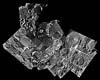
A new map obtained with SMART-1 data shows the geography and illumination of the lunar north pole. Such maps will be of great use for future lunar explorers. The lunar poles are very interesting for future science and exploration of the Moon mainly because of their exposure to sunlight. They display areas of quasi-eternal light, have a stable thermal environment and are close to dark areas that could host water ice - potential future lunar base sites. |
|
|
| The content herein, unless otherwise known to be public domain, are Copyright Space.TV Corporation. AFP and UPI Wire Stories are copyright Agence France-Presse and United Press International. ESA Portal Reports are copyright European Space Agency. All NASA sourced material is public domain. Additional copyrights may apply in whole or part to other bona fide parties. Advertising does not imply endorsement, agreement or approval of any opinions, statements or information provided by Space.TV Corp on any Web page published or hosted by Space.TV Corp. Privacy Statement |