|
 |
 |
 |
 |
 |
 |
 |
 |

 |
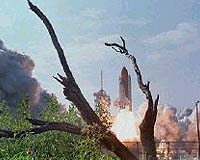
NASA Launches Space Shuttle Endeavour For Station Teach-In
Washington (AFP) Aug 08, 2007 NASA's space shuttle Endeavour blasted off Wednesday sending the first teacher into space 21 years after the Challenger explosion tragically ended the dream of another pioneering teacher. Teacher-turned-astronaut Barbara Morgan, 55, has become the star of the second shuttle mission to the International Space Station this year, which has otherwise been marked by embarrassing stories of drunken and love-crazed astronauts. Her chance to fly into space finally came with Endeavour's launch at 6:36 pm (2236 GMT) Wednesday from the Kennedy Space Center in Cape Canaveral. The booster rockets separated about two minutes after the shuttle lifted off, and Endeavour was hurtling toward space at a speed of 15,000 miles per hour (24,000 kilometers per hour), a NASA official said. "Class is in session," a NASA spokesman said after the external fuel tank separated from the shuttle and the Endeavour entered its preliminary orbit less than nine minutes into the flight. "Good luck, Godspeed and have some fun up there," said Michael Leinbach, the launch director. The shuttle is to reach the orbiting International Space Station on Friday at 1753 GMT. First Lady Laura Bush, a former teacher herself, called Morgan Tuesday to offer congratulations from "one school teacher to another." Morgan had trained alongside fellow teacher Christa McAuliffe in the 1980s as a backup for the Challenger shuttle mission. The National Aeronautics and Space Administration had hoped that sending a teacher into space would fire the imaginations of millions and keep up support for its shuttle program. But on January 28, 1986, Challenger exploded and broke up 73 seconds after blastoff, killing all seven aboard, and delaying for two decades Morgan's own aspirations to join the elite astronaut corps. "Christa was, is, and always will be our 'Teacher in Space,' our first teacher to fly" in a shuttle, Morgan said in an interview released by NASA. "She truly knew what this was all about -- not just bringing the world to her classroom, but also helping ... to show the world what teachers do," she said. After the Challenger disaster Morgan went back to teaching, and then rejoined the astronaut corps in 1998. Once in space she will operate robotic arms on the ISS and the shuttle to unload and install new equipment and supplies on the space station. Endeavour is taking seven astronauts, including a Canadian, on an 11-day mission to continue the expansion of the ISS, an orbiting laboratory that NASA considers a key part of its space exploration ambitions. The mission will carry a truss section about the size of a small car to extend the space station to a length of 108 meters (354 feet), about the size of a football pitch. The astronauts will also replace a defective gyroscope, one of four keeping the space station on an even keel, and install an exterior stowage platform. Astronauts will venture out of the ISS on three spacewalks to complete assembly and repair tasks. NASA could prolong the mission by three days to include a fourth space walk, to prepare for installation of a boom that will allow crews to inspect for potential damage to the shuttle's heat shield. NASA has been leery of damage to shuttle heat shields since February 2003, when a broken thermal tile led to the disintegration of shuttle Columbia on re-entry, killing all seven aboard and putting the shuttle program on hold for two-and-a-half years. NASA finally resumed ISS construction missions last year after conducting two missions aimed at improving safety, but the space agency has been hit by earthly scandals ever since. Earlier this year, astronaut Lisa Nowak was arrested and charged with attempting to kidnap a woman dating another married astronaut. She has since been fired from NASA. The incident prompted NASA to set up an internal panel to review astronauts' health. The panel recently issued a report saying astronauts had been allowed to fly into space while drunk, sparking worry in Congress about NASA management. The space agency avoided yet another black eye with this mission, by repairing in time for lift-off a computer that had been sabotaged while in the care of a NASA contractor. Community Email This Article Comment On This Article Related Links Shuttle at NASA Shuttle at NASA Watch NASA TV via Space.TV Space Shuttle News at Space-Travel.Com
 NASA Develops Wireless Tile Scanner For Space Shuttle Inspection
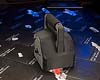 Moffett Field, CA (SPX) Aug 08, 2007
A new space shuttle tile inspection method using NASA-built, wireless scanners is replacing manual inspection. The new process begins with the upcoming shuttle mission, STS-118. Endeavour is scheduled to launch from NASA's Kennedy Space Center in Florida on Wednesday, Aug. 8 at 6:36 p.m. EDT. Technicians have been using six new scanners to look for cracks and other imperfections in some of the 24,000 tiles that cover space shuttle Endeavour. |
|
|
| The content herein, unless otherwise known to be public domain, are Copyright Space.TV Corporation. AFP and UPI Wire Stories are copyright Agence France-Presse and United Press International. ESA Portal Reports are copyright European Space Agency. All NASA sourced material is public domain. Additional copyrights may apply in whole or part to other bona fide parties. Advertising does not imply endorsement, agreement or approval of any opinions, statements or information provided by Space.TV Corp on any Web page published or hosted by Space.TV Corp. Privacy Statement |