|
 |
 |
 |
 |
 |
 |
 |
 |

 |
NASA's New Ares Rocket Engine Passes Review
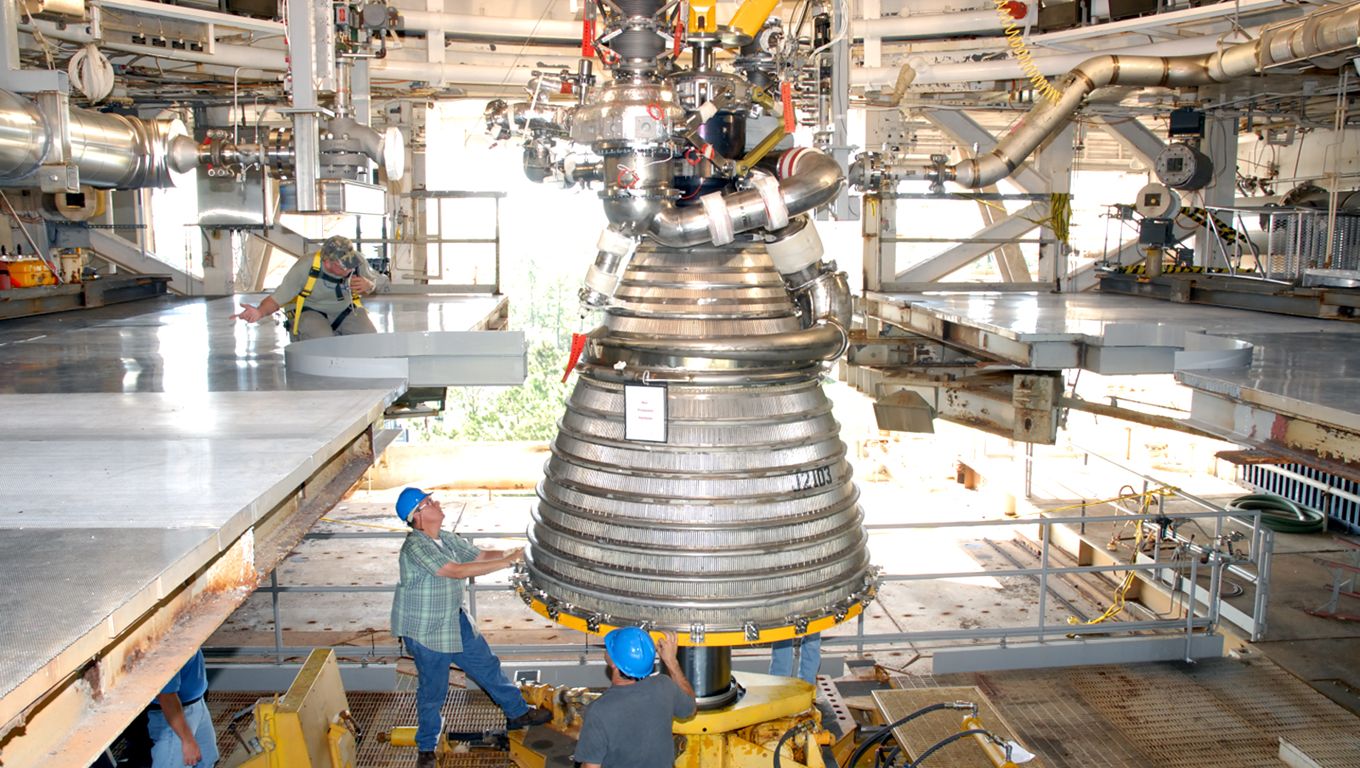
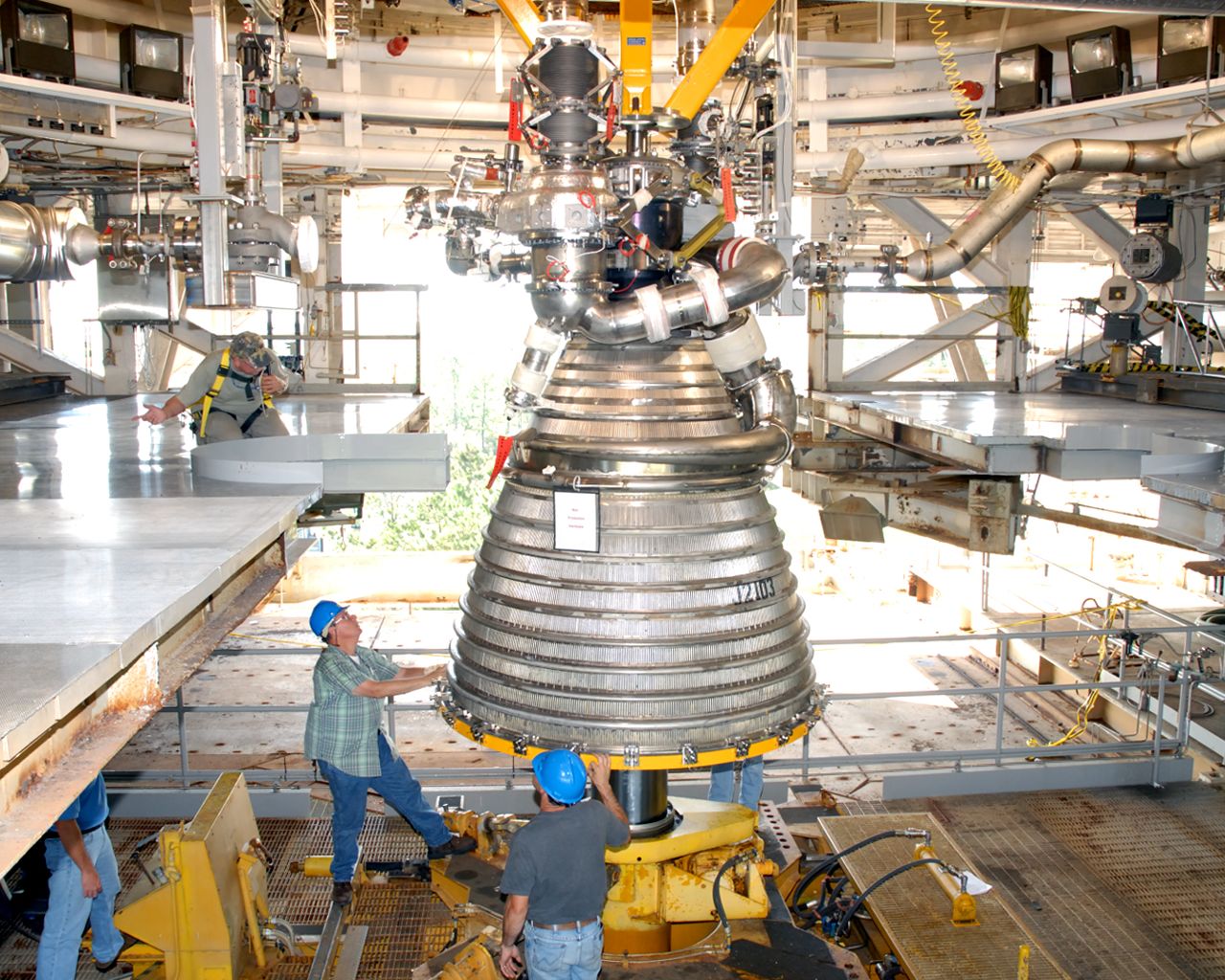
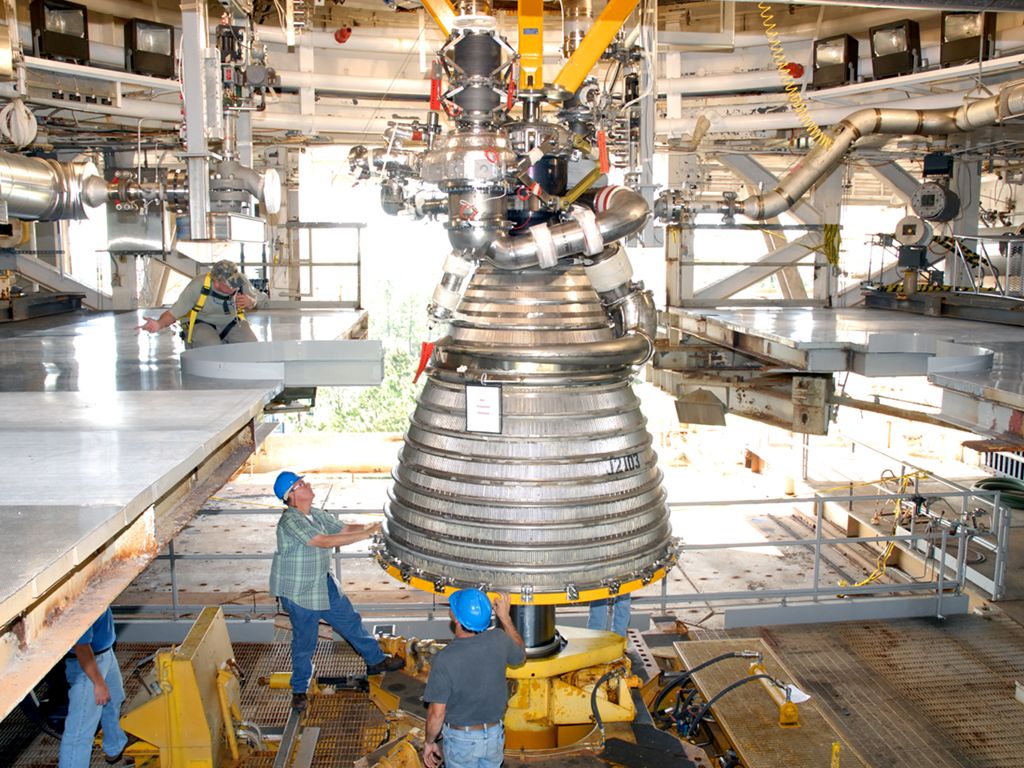
Huntsville AL (SPX) Nov 17, 2008 NASA's newest high-performance rocket engine, the J-2X, successfully completed its critical design review Thursday at NASA's Marshall Space Flight Center in Huntsville, Ala. The J-2X engine, developed for NASA by Pratt and Whitney Rocketdyne of Canoga Park, Calif., is the first element of NASA's Constellation Program to pass this design milestone. The engine will power the upper stage of NASA's next-generation Ares I rocket and the Earth departure stage of the Ares V heavy cargo launch vehicle. The Constellation Program is responsible for developing this new fleet of rockets, as well as the Orion crew capsule and the Altair lunar lander that will send explorers to the International Space Station, the moon and beyond. "The approval by the upper stage engine critical design review board signals the beginning of manufacturing and full-scale testing of this high-performance engine," said Steve Cook, manager for the Ares Projects at Marshall. "This is a testament to the team's hard work during the past three years and validates our continued development of this important element of Ares I and V rockets." The board is comprised of engineers and project managers, including representatives from the Safety and Mission Assurance organization, who reviewed the detailed designs of the new engine. The critical design review demonstrated the maturity of the engine's design and concluded that the planned technical approach meets NASA's requirements for propulsion of the Ares I upper stage. Full-scale testing will begin in the fall of 2010. "The design of this propulsion system confirms that Ares I is proceeding on a solid foundation -- built on years of experience by an eager team of engineers," said Teresa Vanhooser, chairperson for the J-2X Critical Design Review Board. "Our goal is to build the safest and most reliable system possible to carry our future explorers on missions of exploration." The J-2X engine is expected to be the most efficient engine of its type ever built. The high efficiency is achieved by using advanced design turbopumps, fuel injectors and a large extension added to the nozzle -- the large, bell-shaped structure through which exhaust gases are expelled with great force as they are burned by the engine. These enhancements deliver greater thrust, or liftoff power, while burning fuel more efficiently. The J-2X development follows the Constellation Program's goals to seek commonality between the Ares I and Ares V systems, and use proven hardware and knowledge from 50 years of American spaceflight experience to streamline development and reduce program, technical and budget risks. "We now are ready for the challenges ahead as we move to build and test this new engine," said Mike Kynard, manager of the Upper Stage Engine Element for the Ares Projects at Marshall. "The J-2X engine design process has been a rewarding endeavor, offering a once-in-a-lifetime opportunity to develop this high-performance rocket engine that will play a vital role in America's future in space." Marshall manages the Ares projects and is responsible for design and development of the Ares I and Ares V vehicles. NASA's Johnson Space Center in Houston manages the Constellation Program, which includes the Ares I, the Ares V, the Orion and the Altair. NASA's Kennedy Space Center in Florida is responsible for program ground and launch operations. The program also includes multiple project-element teams at NASA centers and contract organizations around the United States. Share This Article With Planet Earth
Related Links Ares Rocket Science News at Space-Travel.Com
 NASA to test Orion launch abort system
 Washington (UPI) Nov 10, 2008
 The U.S. space agency and Alliant Techsystems Inc. say they are planning the first full-scale test of the Orion crew capsule launch abort system. |
|
|

| The content herein, unless otherwise known to be public domain, are Copyright 1995-2007 - SpaceDaily.AFP and UPI Wire Stories are copyright Agence France-Presse and United Press International. ESA Portal Reports are copyright European Space Agency. All NASA sourced material is public domain. Additional copyrights may apply in whole or part to other bona fide parties. Advertising does not imply endorsement,agreement or approval of any opinions, statements or information provided by SpaceDaily on any Web page published or hosted by SpaceDaily. Privacy Statement |

 del.icio.us
 Digg
Digg Reddit
 YahooMyWeb
 Google
 Facebook