|
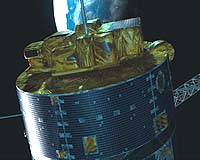
NASA's Polar satellite ends its mission
Greenbelt, Md., April 29, 2008 The U.S. space agency says its Polar satellite has concluded its 12-year mission to study the Northern and Southern lights. When the Polar satellite was launched in February 1996, the plan was for a two-year mission to study the lights that form a ring around Earth's north and south magnetic poles. Polar exceeded expectations by a decade. "We've gone well beyond our original plan and into our dreams," says John Sigwarth of the National Aeronautics and Space Administration's Goddard Space Flight Center in Greenbelt, Md. "Polar ran out of fuel during its final maneuver in February," said Sigwarth. "But even after the fuel was exhausted, we continued to maneuver on the cold helium gas that was left in the tank," he said, likening that to "using the force of your breath as you breathe out to propel yourself backward" if you happen to be traveling through space like a satellite. But now, he said, Polar has run out of breath. Controllers turned off the satellite Monday, slightly ahead of a likely fatal encounter with the sun. From its current orientation, Polar will drift slowly, allowing the sun's energy to quickly overwhelm the satellite, Sigwarth said. Community Email This Article Comment On This Article Related Links Earth Observation News - Suppiliers, Technology and Application
 NASA Web Tool Enhances Airborne Earth Science Mission
 Greenbelt MD (SPX) Apr 29, 2008
What if you were embarking on a road trip and you had an on-board tool, complete with video screen, that let you view your projected route, real-time traffic information and current weather, at any time during the journey? Not only that, but friends and family anywhere else in the world could follow your progress on a home computer. Sound good? |
|
|
| The content herein, unless otherwise known to be public domain, are Copyright Space.TV Corporation. AFP and UPI Wire Stories are copyright Agence France-Presse and United Press International. ESA Portal Reports are copyright European Space Agency. All NASA sourced material is public domain. Additional copyrights may apply in whole or part to other bona fide parties. Advertising does not imply endorsement, agreement or approval of any opinions, statements or information provided by Space.TV Corp on any Web page published or hosted by Space.TV Corp. Privacy Statement |