
 |
 |
 |
 |
 |
 |
 |
 |
 |

 |

Corvallis OR (SPX) Jul 23, 2010 Engineers at Oregon State University have made a significant advance toward producing electricity from sewage, by the use of new coatings on the anodes of microbial electrochemical cells that increased the electricity production about 20 times. The findings, just published online in Biosensors and Bioelectronics, a professional journal, bring the researchers one step closer to technology that could clean biowaste at the same time it produces useful levels of electricity - a promising new innovation in wastewater treatment and renewable energy. Engineers found that by coating graphite anodes with a nanoparticle layer of gold, the production of electricity increased 20 times. Coatings with palladium produced an increase, but not nearly as much. And the researchers believe nanoparticle coatings of iron - which would be a lot cheaper than gold - could produce electricity increases similar to that of gold, for at least some types of bacteria. "This is an important step toward our goal," said Frank Chaplen, an associate professor of biological and ecological engineering. "We still need some improvements in design of the cathode chamber, and a better understanding of the interaction between different microbial species. But the new approach is clearly producing more electricity." In this technology, bacteria from biowaste such as sewage are placed in an anode chamber, where they form a biofilm, consume nutrients and grow, in the process releasing electrons. In this context, the sewage is literally the fuel for electricity production. In related technology, a similar approach may be able to produce hydrogen gas instead of electricity, with the potential to be used in hydrogen fuel cells that may power the automobiles of the future. In either case, the treatment of wastewater could be changed from an energy-consuming technology into one that produces usable energy. Researchers in the OSU College of Engineering and College of Agricultural Sciences, including Hong Liu, an assistant professor of biological and ecological engineering, are national leaders in development of this technology, which could significantly reduce the cost of wastewater treatment in the United States. It might also find applications in rural areas or developing nations, where the lack of an adequate power supply makes wastewater treatment impractical. It may be possible to create sewage treatment plants that are completely self-sufficient in terms of energy usage. The technology already works on a laboratory basis, researchers say, but advances are necessary to lower its cost, improve efficiency and electrical output, and identify the lowest cost materials that can be used. This research has been supported by the National Science Foundation and the Oregon Nanoscience and Microtechnologies Institute. "Recent advances in nanofabrication provide a unique opportunity to develop efficient electrode materials due to the remarkable structural, electrical and chemical properties of nanomaterials," the researchers wrote in their report. "This study demonstrated that nano-decoration can greatly enhance the performance of microbial anodes."
Share This Article With Planet Earth
Related Links Oregon State University Powering The World in the 21st Century at Energy-Daily.com

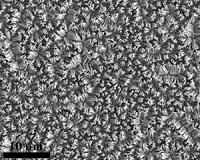 Engineering Researchers Simplify Process To Make World's Tiniest Wires
Gainesville FL (SPX) Jul 22, 2010 Surface tension isn't a very powerful force, but it matters for small things - water bugs, paint, and, it turns out, nanowires. Nanowires are so tiny that a human hair would dwarf them - some have diameters 150 billionths of a meter. Because of their small size, surface tension that occurs during the manufacturing process pulls them together, limiting their usefulness. This is a problem be ... read more |
|
|
| The content herein, unless otherwise known to be public domain, are Copyright 1995-2010 - SpaceDaily. AFP and UPI Wire Stories are copyright Agence France-Presse and United Press International. ESA Portal Reports are copyright European Space Agency. All NASA sourced material is public domain. Additional copyrights may apply in whole or part to other bona fide parties. Advertising does not imply endorsement,agreement or approval of any opinions, statements or information provided by SpaceDaily on any Web page published or hosted by SpaceDaily. Privacy Statement |


 del.icio.us
 Digg
Digg Reddit
 YahooMyWeb
 Google
 Facebook


