
 |
 |
 |
 |
 |
 |
 |
 |
 |

 |
Natural Selection Is Not The Only Process That Drives Evolution
Uppsala, Sweden (SPX) Jan 29, 2009 Why have some of our genes evolved rapidly? It is widely believed that Darwinian natural selection is responsible, but research led by a group at Uppsala University, suggests that a separate neutral (nonadaptive) process has made a significant contribution to human evolution. The researchers identified fast evolving human genes by comparing our genome with those of other primates. However, surprisingly, the patterns of molecular evolution in many of the genes they found did not contain signals of natural selection. Instead, their evidence suggests that a separate process known as BGC (biased gene conversion) has speeded up the rate of evolution in certain genes. This process increases the rate at which certain mutations spread through a population, regardless of whether they are beneficial or harmful. "The research not only increases our understanding of human evolution, but also suggests that many techniques used by evolutionary biologists to detect selection may be flawed" says Matthew Webster BGC is thought to be strongest in regions of high recombination, and can cause harmful mutations can spread through populations. The results lead to the provocative hypothesis that, rather than being the result of Darwinian selection for new adaptations, many of the genetic changes leading to human-specific characters may be the result of the fixation of harmful mutations. This contrasts the traditional Darwinistic view that they are the result of natural selection in favour of adaptive mutations. Share This Article With Planet Earth
Related Links Uppsala University Darwin Today At TerraDaily.com
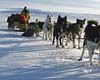
 How Does A Dog Walk? Surprisingly, Many Of Us Don't Really Know
 Budapest, Hungary (SPX) Jan 29, 2009
Despite the fact that most of us see our four-legged friends walking around every day, most of us-including many experts in natural history museums and illustrators for veterinary anatomy text books-apparently still don't know how they do it. |
|
|

| The content herein, unless otherwise known to be public domain, are Copyright 1995-2007 - SpaceDaily.AFP and UPI Wire Stories are copyright Agence France-Presse and United Press International. ESA Portal Reports are copyright European Space Agency. All NASA sourced material is public domain. Additional copyrights may apply in whole or part to other bona fide parties. Advertising does not imply endorsement,agreement or approval of any opinions, statements or information provided by SpaceDaily on any Web page published or hosted by SpaceDaily. Privacy Statement |

 del.icio.us
 Digg
Digg Reddit
 YahooMyWeb
 Google
 Facebook