|
 |
 |
 |
 |
 |
 |
 |
 |

 |
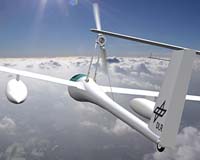
New DLR Research Aircraft Takes Off Using Fuel Cell Propulsion
Munich, Germany (SPX) May 14, 2008 In its search for new ways to reduce fuel consumption and pollutant emissions from air traffic, the German Federal Ministry of Economics and Technology (Bundesministeriums fur Wirtschaft und Technologie; BMWi) puts its hopes in fuel cell technology. In the context of its aeronautics research programme Lufo IV, the Ministry has commissioned the German Aerospace Center (Deutsches Zentrum fur Luft- und Raumfahrt; DLR) to conduct the required development activities. The goal of the research is to develop fuel cells for a reliable on-board power supply for wide-body airliners.
Developing a high-tech aircraft to qualify fuel cells for aviation Two additional external pods, housing the fuel cell system and the hydrogen tanks, are added underneath the wings, which have been strengthened for this purpose. In the future, the performance of the aircraft may be increased substantially by using up to four external pods, or by using fuel cells of an improved design. For the first time, DLR-H2 is able to take off using the energy from fuel cells. Fuel cells are not expected to be usable as primary propulsive energy sources for passenger aircraft within the foreseeable future. Instead, the DLR's research is aimed at developing fuel cells under real operational conditions so they can be used as reliable on-board power supplies in civil aviation. As a first step, the DLR in cooperation with Airbus Germany successfully implemented a fuel cell system as the auxiliary power supply for the hydraulic pumps of the steering system of the DLR's research aircraft Airbus A320 ATRA. As a second step, the permanent deployment of a fuel cell system as on-board power supply in wide-body airliners is envisioned. The Antares DLR-H2 flying test bed provides a cost-efficient test environment for developing fuel cell systems for this purpose, optimising the test time of the DLR's research aircraft Airbus A320 ATRA.
Partnership between DLR and Lange Aviation This system is almost identical to the fuel cell system to be used in wide-body aircraft for on-board energy supply, and it supplies the electrical energy for the powertrain developed by Lange Aviation, which consists of power electronics, motor, and propeller. The cooperation between DLR and Lange Aviation has been set up as a long-term partnership between equals, so that the research aircraft are available to the DLR until 2017. The DLR defines and evaluates the research assignments and provides the primary power sources. Lange Aviation GmbH builds the Antares research aircraft and operates it for the DLR. In doing so, the company can build upon many years of experience in developing and building aircraft with electrical propulsion. Further applications may arise from the combination of fuel cell systems and other regenerative energy sources as propulsive power sources for so-called HALE (High Altitude Long Endurance) aircraft. According to the current state of knowledge, these HALE aircraft will be equipped with electrical propulsion. Community Email This Article Comment On This Article Related Links Cooperation between DLR and Lange Aviation Powering The World in the 21st Century at Energy-Daily.com
 Orrin Hatch Helps Raser Technologies Break Ground For Utah Geothermal Power Project
 Provo UT (SPX) May 14, 2008
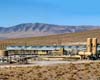
Raser Technologies has announced that they held a groundbreaking ceremony for beginning the construction phase of the first geothermal power plant built in Utah in 20 years. Senator Orrin Hatch participated in the groundbreaking ceremony in Beaver County, Utah, along with many other state and county government officials. |
|
|
| The content herein, unless otherwise known to be public domain, are Copyright Space.TV Corporation. AFP and UPI Wire Stories are copyright Agence France-Presse and United Press International. ESA Portal Reports are copyright European Space Agency. All NASA sourced material is public domain. Additional copyrights may apply in whole or part to other bona fide parties. Advertising does not imply endorsement, agreement or approval of any opinions, statements or information provided by Space.TV Corp on any Web page published or hosted by Space.TV Corp. Privacy Statement |