
 |
 |
 |
 |
 |
 |
 |
 |
 |

 |

Berkeley CA (SPX) Jul 27, 2010 Scientists are working hard to develop the tools and find the organisms to break down the complex structure of plant cellulose into its component sugars - the key step toward fermentation of those sugars into usable biofuel. This process needs to be simple and economically efficient before cellulosic biofuels can compete with fossil fuels for transportation energy use. As with any exploration of systems that involve largely unknown processes, a mechanistic model can be an important first step in improved understanding. Researchers at the Energy Biosciences Institute's (EBI) laboratories on the University of California, Berkeley, campus have improved that step, bringing science closer than ever before to predicting the deconstruction activity of enzymes towards cellulose. In a paper recently accepted by the journal Biotechnology and Bioengineering, four EBI scientists at UC Berkeley - chemical engineering faculty members Doug Clark and Harvey Blanch, postdoctoral researcher Seth Levine and graduate student Jerome Fox - detail their analysis that led to the most specific model to date of the enzymatic hydrolysis of cellulose. "It's a first step in being able to have a detailed picture of what happens between cellulases (enzyme mixtures with complementary activities) and the substrate (cellulose)," said lead author Levine. Through this better understanding of the breakdown mechanisms, he said, more directed and rational approaches can be taken to engineer effective enzymes and improve the overall process of hydrolysis. Much of the action happens at the surface of a substance like cellulose, the fibrous polysaccharide in the plant cell wall composed of hydrogen-bonded chains of the sugar glucose. Levine likens the surface to a "black box," where multiple shapes and unknown features of particles add to the complicated nature of the reactions there. Previous models relied on simple, sometimes overly broad assumptions and explained little about the chemical and physical reactions occurring there, he said. With the EBI's latest methodology, the mechanisms by which cellulases trigger the hydrolysis of cellulose were delineated in three steps - adsorption, complexation (molecular bonding) and reaction. The researchers discovered that the amount of surface area was critical for the activities of enzymes and for how well they work together in combination. "The model explicitly tracks individual cellulases and key cellulose surface properties," the paper concludes. "Independent enzyme adsorption and complexation steps have been incorporated in an attempt to capture the most important details of the enzyme-substrate interaction. The model results illustrate the importance of understanding the effect of relevant surface areas to enzyme hydrolysis activity." One phenomenon they tracked was the typical decline in the sugar breakdown rates after an initial "burst" phase, a reaction that usually leads to longer processing and greater enzyme loads, a costly and time-consuming step. Their research revealed a mix of surface area, structural changes within the surface, and cellulase interactivity during hydrolysis as major contributors to the slowdown. Further refinement of the model in future investigations should uncover more details. "This work confirms that despite the complexity, enzymatic hydrolysis of cellulose is amenable to modeling," said Clark, the principal investigator for the EBI program on "Bioprocess Optimization from Cellulose Hydrolysis to Product Fermentation." "It also shows the importance of surface area, which we can control through pre-treatment (of the cellulose). There are now a lot of levers we can play with in finding an optimal enzymatic route to break cellulose down into sugars that can be converted to fuels." Though many unknowns still remain in deciphering the complicated process that extracts sugars from plant cellulose, the EBI's mechanistic model adds a significant tool to the scientist's kit.
Share This Article With Planet Earth
Related Links University of California - Berkeley Bio Fuel Technology and Application News

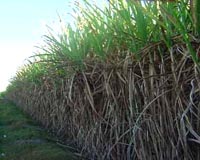 Bioenergy Production Can Expand Across Africa Without Displacing Food
Ouagadougou, Burkina Faso (SPX) Jul 27, 2010 Crops can be produced for bioenergy on a significant scale in west, eastern and southern Africa without doing damage to food production or natural habitats, according to a report produced by the Forum for Agricultural Research in Africa (FARA), Imperial College London, and CAMCO International. The study was released at the 5th African Agriculture Science Week in Burkina Faso. "If approache ... read more |
|
|
| The content herein, unless otherwise known to be public domain, are Copyright 1995-2010 - SpaceDaily. AFP and UPI Wire Stories are copyright Agence France-Presse and United Press International. ESA Portal Reports are copyright European Space Agency. All NASA sourced material is public domain. Additional copyrights may apply in whole or part to other bona fide parties. Advertising does not imply endorsement,agreement or approval of any opinions, statements or information provided by SpaceDaily on any Web page published or hosted by SpaceDaily. Privacy Statement |


 del.icio.us
 Digg
Digg Reddit
 YahooMyWeb
 Google
 Facebook


