
 |
 |
 |
 |
 |
 |
 |
 |
 |

 |
New anti-cancer control mechanism found
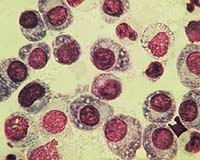
Montreal (UPI) Jan 21, 2009 Canadian medical researchers say they have discovered a new anti-cancer, anti-infection response control mechanism. Dr. Andre Veillette of the Institute of Research Clinics in Montreal, and his team led by postdoctoral fellow Dr. Mario-Ernesto Cruz-Munoz, said their discovery could have a significant impact on the treatment of cancers and infectious diseases. The team identified one of the basic mechanisms controlling "natural killer" cell activity. Produced by the immune system, NK cells are responsible for recognizing and killing cancer cells and cells infected by viruses, they said, and NK cell deficiency is associated with a higher incidence of cancers and serious infections. "Our breakthrough demonstrates that a molecule known as CRACC, which is present at the surface of NK cells, increases their killer function," said Veillette. Using mice, the researchers showed those lacking the CRACC gene were found to be more susceptible to cancer persistence. Conversely, stimulation of CRACC function was found to improve cancer cell elimination. Thus, they said, stimulating CRACC could boost NK cell activity, helping to fight cancers. In addition, it could improve the ability to fight infections, which are also handled by NK cells. The findings are detailed in the journal Nature Immunology. Share This Article With Planet Earth
Related Links Hospital and Medical News at InternDaily.com
 China expects to invest 120 billion dollars in healthcare: govt
 Beijing (AFP) Jan 21, 2009
China said Wednesday it planned to invest 850 billion yuan (120 billion dollars) in the reform of its healthcare system in the next three years. |
|
|

| The content herein, unless otherwise known to be public domain, are Copyright 1995-2007 - SpaceDaily.AFP and UPI Wire Stories are copyright Agence France-Presse and United Press International. ESA Portal Reports are copyright European Space Agency. All NASA sourced material is public domain. Additional copyrights may apply in whole or part to other bona fide parties. Advertising does not imply endorsement,agreement or approval of any opinions, statements or information provided by SpaceDaily on any Web page published or hosted by SpaceDaily. Privacy Statement |
 del.icio.us
 Digg
Digg Reddit
 YahooMyWeb
 Google
 Facebook