
 |
 |
 |
 |
 |
 |
 |
 |
 |

 |
Obama Takes The Football And Mitt Part Four
Washington (UPI) Jan 20, 2009 Newly inaugurated U.S. President Barack Obama should approve a plan to expand the role of the U.S. armed services in ballistic missile defense. Obama so far has been silent regarding the proper role of the services in ballistic missile defense. However, as missile defense systems mature, they should be put into the hands of the military services that will operate them. This includes the transfer of procurement funding for these systems. This already has happened in great measure with the transfer of the Raytheon Patriot PAC-3 terminal interceptor system from the Missile Defense Agency to the U.S. Army. A similar effort to do the same with the transfer of the AEGIS-based midcourse and terminal defense systems to the U.S. Navy should be accelerated. On the other hand, the MDA should retain responsibility for the development and testing of new systems and for ensuring that the disparate elements of the broader missile system, including sensors and interceptors, can be tied together into an integrated whole through the command-and-control network that will cut across service lines. Regarding the development and fielding of space-based elements, Obama has stated he will not "weaponize" space, but the ballistic missiles he has pledged to counter are space weapons. Since they fly through space, it should not surprise him that the most effective and cost-effective defenses against them will be space-based. Missile defense needs to go to space because that is where the missiles are during their flights. According to an authoritative report from the Independent Working Group, a constellation of 1,000 space-based hit-to-kill interceptors, along with replacements, would cost less than $20 billion to build, launch, operate and maintain over a 20-year period. This constellation alone would constitute a global, layered missile defense capability, although it should be augmented with land-based, sea-based and air-based elements. In fact, this broader approach is consistent with an acquisition strategy that properly balances near-term and longer-term technologies for missile defense. Ambassador J.D. Crouch and his associates explain this balanced acquisition strategy in their report, "Missile Defense & National Security: The Need to Sustain a Balanced Approach," published by the National Institute for Public Policy as Information Series Report No. 0087 on Oct. 20, 2008. The missile defense program is designed to defend U.S. troops stationed abroad and U.S. allies as well as America's population and territory. (Baker Spring is F.M. Kirby research fellow in national security policy in the Douglas and Sarah Allison Center for Foreign Policy Studies, a division of the Kathryn and Shelby Cullom Davis Institute for International Studies; Peter Brookes is senior fellow for national security affairs in the Davis Institute; and James Jay Carafano, Ph.D., is assistant director of the Davis Institute and senior research fellow for national security and homeland security in the Allison Center at The Heritage Foundation.) (United Press International's "Outside View" commentaries are written by outside contributors who specialize in a variety of important issues. The views expressed do not necessarily reflect those of United Press International. In the interests of creating an open forum, original submissions are invited.) Share This Article With Planet Earth
Related Links Learn about missile defense at SpaceWar.com Learn about nuclear weapons doctrine and defense at SpaceWar.com All about missiles at SpaceWar.com Learn about the Superpowers of the 21st Century at SpaceWar.com
 New US president could order missile shield review: official
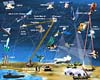 Brussels (AFP) Jan 19, 2009
President-elect Barak Obama could order a review of US missile shield plans after he takes office to see how the system is evolving and whether it is cost effective, a senior US official said Monday. |
|
|

| The content herein, unless otherwise known to be public domain, are Copyright 1995-2007 - SpaceDaily.AFP and UPI Wire Stories are copyright Agence France-Presse and United Press International. ESA Portal Reports are copyright European Space Agency. All NASA sourced material is public domain. Additional copyrights may apply in whole or part to other bona fide parties. Advertising does not imply endorsement,agreement or approval of any opinions, statements or information provided by SpaceDaily on any Web page published or hosted by SpaceDaily. Privacy Statement |

 del.icio.us
 Digg
Digg Reddit
 YahooMyWeb
 Google
 Facebook