|
 |
 |
 |
 |
 |
 |
 |
 |

 |
Outside View: Russia-EU energy cooperation
Moscow (UPI) Oct 17, 2007 The European Commission suggested imposing tough terms on the acquisition and possession of EU energy assets on Sept. 19. The proposals are outlined in five bills that will have to be endorsed by the Commission and European Parliament and signed by the Council before they become law. The Commission's proposals do not paint a full picture of the final configuration of the European energy space. But a consensus has already formed in the expert community that sees the would-be "energy curtain" around Europe as a response to Russia's efforts to set legal limits on foreign investment in strategic industries. This view is not entirely correct. What is happening in Europe is probably better seen as part of a global trend. On the one hand, national economies are becoming increasingly open, capital flows freely from one region to another, multinationals are operating in many spheres, corporations are being merged and taken over. On the other hand, nobody has abolished the notion of "national security" and "defense capability." The experience of work on the bill "On Procedures for Foreign Companies Making Investment in Commercial Companies of Strategic Importance for National Security" has shown that it is quite possible to achieve a reasonable balance between state security considerations and an understandable and predictable investment climate. Deviations to one side or the other may seriously undermine our position in the outside world. We are against black lists. We are offering investors a clear-cut pattern for deals with "sensitive" assets. I would like to hope that our European partners, amongst others, will appreciate this ideology. I'm not sure what Brussels is trying to prevent by restricting foreign access to the EU energy market. That is a question for my European colleagues. But I believe it would be strange to fear money or rank it depending on the country of its origin. Technology transfer is a more sensitive issue. Naturally enough, those countries that lead the field and wish to maintain their advantage in technology are trying to control their technological achievements. But many projects, such as the Shtokman deposit or space exploration, are of a supranational character, where technological cooperation is a must. Again, it is important to find a reasonable and mutually acceptable balance of interests. Will EU efforts to limit "objectionable" investment have an effect on Russia-EU industrial and energy cooperation? It is difficult to predict the situation for sure. But, luckily, the world market generates not only global risks but also global opportunities. Russia stretches across more than one geographical region, and we can diversify our industrial and energy cooperation by turning to Asian and Pacific countries. Incidentally, the eastern vector has a major domestic dimension -- such cooperation will help us develop Eastern Siberia and the Far East. But I'm convinced that the EU has been and will remain our key partner. (Viktor Khristenko is the Russian Minister of Industry and Energy. This article is reprinted by permission of RIA Novosti. The opinions expressed in this article are the author's and do not necessarily represent those of RIA Novosti.) (United Press International's "Outside View" commentaries are written by outside contributors who specialize in a variety of important issues. The views expressed do not necessarily reflect those of United Press International. In the interests of creating an open forum, original submissions are invited.) Community Email This Article Comment On This Article Related Links Powering The World in the 21st Century at Energy-Daily.com
 Iran Determined To Protect Its Interests In Caspian Region
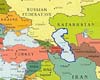 Tehran, Iran (RIA Novosti) Oct 18, 2007
Tehran will not sign any agreements on the status of the Caspian Sea until its national interests in the region are fully safeguarded, Iran's deputy foreign minister said Wednesday. "We will make a determined effort to protect Iran's interests in the Caspian region," Mehdi Safari said on national TV after the conclusion of the second Caspian summit in the Iranian capital. "Until Iran's national interests in the region are fully respected, we will not make any commitments or sign any agreements," he said. |
|
|
| The content herein, unless otherwise known to be public domain, are Copyright Space.TV Corporation. AFP and UPI Wire Stories are copyright Agence France-Presse and United Press International. ESA Portal Reports are copyright European Space Agency. All NASA sourced material is public domain. Additional copyrights may apply in whole or part to other bona fide parties. Advertising does not imply endorsement, agreement or approval of any opinions, statements or information provided by Space.TV Corp on any Web page published or hosted by Space.TV Corp. Privacy Statement |