|
 |
 |
 |
 |
 |
 |
 |
 |

 |
Outside View: Russia's ABM plans -- Part 1
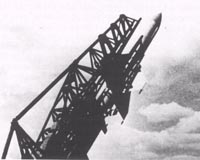
Moscow (UPI) May 20, 2008 Thirty years ago, on May 15, 1978, a missile defense system was placed on combat duty to protect Moscow as the capital of the Soviet Union. Russia has been developing missile defense systems since the early 1960s. On March 1, 1961, the Soviet Air-Defense Force conducted the first hit-to-kill test when a V-1000 missile interceptor developed by the Fakel (Torch) design bureau under the supervision of Pyotr Grushin, a member of the Soviet Academy of Sciences, successfully destroyed the warhead of an R-12 intercontinental ballistic missile launched from the Kapustin Yar space center in the Volga region. Several R-5 medium-range ballistic missiles were destroyed during subsequent tests. The United States was able to conduct similar tests only 23 years later. From 1961 to 1971, Soviet experts developed the experimental A-35 missile-defense system around Moscow. The system became operational in June 1971 and protected the Soviet capital and surrounding industrial areas. At that time, the United States, which lacked similar systems, was compelled to negotiate with the Soviet Union. In 1972 Moscow and Washington signed the Anti-Ballistic Missile Treaty, which served as the main element of mutual nuclear parity for several decades. Under the treaty both sides agreed that each could have only two Anti-Ballistic Missile deployment areas that were heavily regulated and placed so that they could not provide a nationwide ABM defense or become the basis for developing one. The United States and the Soviet Union thus left unchallenged the penetrating capability of the other's retaliatory missile forces. Both parties agreed to limit the quantitative improvement of their ABM technology. In 1974 the United States and the Soviet Union signed a protocol to the treaty that entered into force in 1976 and reduced the number of ABM deployment areas to one, either around either side's national capital area or as a single intercontinental ballistic missile deployment area. The United States elected not to deploy an ABM system and in 1976 deactivated its ineffective site at Grand Forks, N.D., around a Minuteman intercontinental ballistic missile launch area. Although the 1971 Soviet ABM system became obsolete even before it was commissioned, the Anti-Ballistic Missile Treaty allowed Moscow to upgrade it. On May 15, 1978, the more advanced A-35M system was placed on active duty around Moscow. However, the United States subsequently embarked on an ambitious multiple independent re-entry vehicle program that nullified the Soviet system's capabilities. Next: The need to avoid a new ABM arms race (Yury Zaitsev is an academic adviser at the Russian Academy of Engineering Sciences. This article is reprinted by permission of RIA Novosti. The opinions expressed in this article are the author's and do not necessarily represent those of RIA Novosti.) (United Press International's "Outside View" commentaries are written by outside contributors who specialize in a variety of important issues. The views expressed do not necessarily reflect those of United Press International. In the interests of creating an open forum, original submissions are invited.) Community Email This Article Comment On This Article Related Links Learn about missile defense at SpaceWar.com Learn about nuclear weapons doctrine and defense at SpaceWar.com All about missiles at SpaceWar.com Learn about the Superpowers of the 21st Century at SpaceWar.com
 BMD Focus: Medvedev's missile pledge
 Washington (UPI) May 20, 2008
 It's not exactly a surprise, but it's important news anyway. Russia's new President Dmitry Medvedev has pledged to maintain the top-priority modernization of the Russian Strategic Missile Forces designed to be able to swamp America's ballistic missile defense systems. |
|
|
| The content herein, unless otherwise known to be public domain, are Copyright Space.TV Corporation. AFP and UPI Wire Stories are copyright Agence France-Presse and United Press International. ESA Portal Reports are copyright European Space Agency. All NASA sourced material is public domain. Additional copyrights may apply in whole or part to other bona fide parties. Advertising does not imply endorsement, agreement or approval of any opinions, statements or information provided by Space.TV Corp on any Web page published or hosted by Space.TV Corp. Privacy Statement |