
 |
 |
 |
 |
 |
 |
 |
 |
 |

 |
Phoenix to dig into Mars soil in first probe
Washington (AFP) June 5, 2008 The US Mars probe Phoenix was ready to dig its backhoe-like arm into the Martian arctic soil for samples scientists hope hold signs of the existence of water and life-supporting organic minerals, NASA said Thursday. Two weeks after landing on the Red Planet, the Phoenix will cut its first hole into the Martian permafrost in the landmark mission to probe for the conditions supportive of life. "We are preparing to acquire samples with the robotic arm," said Chris Lewicki of the NASA's Jet Propulsion Laboratory (JPL) in Pasadena, California, which is running the Phoenix mission. The first sample will come from the top layer of soil in one of three holes near the spacecraft. It will be dug up from one of three holes near the lander with its 2.35 meter (7.7 foot) titanium and aluminum backhoe-like arm, with a scoop on the end. Photographs have already revealed around Phoenix what appears to be significant ice, uncovered when dust was blown off the surface by the lander's rockets. Lewicki said the samples would be transferred by the arm to the thermal and evolved gas analyzer (TEGA) aboard Phoenix, one of several instruments designed to analyze soil samples. "We'll clarify tonight that we've got an acceptable amount of sample," he said, before moving the sample to the TEGA, which will cook the sample with extremely high heat to see if it can detect the presence of carbon and hydrogen, key to sustaining life. Phoenix landed on the Red Planet's northern polar region on May 25 for a three-month job of inspecting the soil for the right combination of water in its ice form and minerals that would demonstrate the planet could or can support basic microbial life. Since the landing Phoenix has been recording images of the stark surrounding landscape and measuring the atmospheric conditions and weather. The mission continues to be hampered by glitches in communications between Phoenix and the Odyssey Mars orbiter, which relays instructions and data between Earth and the lander. NASA has been using as a backup the Mars Reconnaissance Orbiter for communications. "We expect the next day or two, we'll be able to resume service" with Odyssey, said Chad Edwards, JPL chief telecommunications engineer. Community Email This Article Comment On This Article Share This Article With Planet Earth
Related Links Mars News and Information at MarsDaily.com Lunar Dreams and more
 Simulations Predicted Mars Lander Would Hit Subsurface
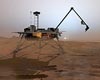 Ann Arbor MI (SPX) Jun 06, 2008
University of Michigan simulations correctly predicted that the pulsed jets of the Mars Phoenix lander would strip the soil to the subsurface ice or rock as the craft touched down. |
|
|

| The content herein, unless otherwise known to be public domain, are Copyright 1995-2007 - SpaceDaily.AFP and UPI Wire Stories are copyright Agence France-Presse and United Press International. ESA Portal Reports are copyright European Space Agency. All NASA sourced material is public domain. Additional copyrights may apply in whole or part to other bona fide parties. Advertising does not imply endorsement,agreement or approval of any opinions, statements or information provided by SpaceDaily on any Web page published or hosted by SpaceDaily. Privacy Statement |

 del.icio.us
 Digg
Digg Reddit
 YahooMyWeb
 Google
 Facebook