
 |
 |
 |
 |
 |
 |
 |
 |
 |

 |

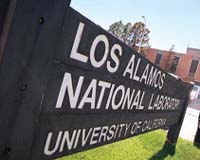
Washington DC (SPX) Nov 09, 2010 Just like an electrical switch allows the flow of electricity into electrical circuits, relativistic transparency in plasma can act like a fast optical switch allowing the flow of light through otherwise opaque plasma. Modern day lasers, such as the Trident laser in Los Alamos National Laboratory delivers a 200 terawatt power pulse (roughly 400 times the average electrical consumption of the United States) in half a trillionth of a second (picosecond) time. When the laser power reaches a threshold limit, relativistic transparency in plasma turns the initially opaque plasma transparent in less than a tenth of a picosecond. Powerful lasers are used to drive plasmas in next-generation particle accelerators and x-ray beams. One shortcoming of these beams is that they typically have a range of energy, caused by the gradual rise of laser power from zero to its maximum level. Using an optical switch, this ramp up time can be reduced to less than a tenth of a picosecond, delivering peak laser power to the plasma on a faster time scale. So, how does this relativistic transparency happen inside plasma? When a laser beam is incident on (or strikes) plasma, electrons in the plasma react to the laser to cancel its presence inside the plasma. But when the laser is powerful enough to accelerate electrons close to the speed of light, the mass of the electrons increases, making them "heavier." These heavier electrons cannot react quickly enough; hence the laser beam propagates through the plasma. Now, for the first time, scientists at Los Alamos National Laboratory and Ludwig-Maximilian Universitat (LMU) in Germany have been able to make a direct observation of relativistic transparency in thin plasmas using a Frequency-Resolved Optical Gating (FROG) device. The discovery was made possible by two key capabilities: the ability to fabricate carbon foils a few nanometers thick to produce thin plasma, and the elimination of optical noise preceding the Trident laser pulse on a few picosecond timescale. Initially, the researchers observed pulse shortening due to relativistic transparency and consistent spectral broadening. Later, they also measured the shape of the laser pulses incident on and transmitted through the plasma to directly observe the transparency. The transmitted laser pulse is roughly half the duration of the incident laser pulse, with a transparency turn on time around a fifth of a picosecond. The experimental results are well consistent with that of computer simulation, except the loss of fast turn-on time due to propagation effects arising from diffraction. Efforts are currently underway to eliminate diffraction limitations to observe the true turn-on time.
Share This Article With Planet Earth
Related Links Los Alamos National Laboratory Powering The World in the 21st Century at Energy-Daily.com

 Scientists Produce Transparent, Light-Harvesting Material
Los Alamos NM (SPX) Nov 08, 2010 Scientists at the U.S. Department of Energy's Los Alamos National Laboratory and Brookhaven National Laboratory have fabricated transparent thin films capable of absorbing light and generating electric charge over a relatively large area. The material, described in the journal Chemistry of Materials, could be used in development of transparent solar panels. "Potentially, with future ... read more |
|
|
| The content herein, unless otherwise known to be public domain, are Copyright 1995-2010 - SpaceDaily. AFP and UPI Wire Stories are copyright Agence France-Presse and United Press International. ESA Portal Reports are copyright European Space Agency. All NASA sourced material is public domain. Additional copyrights may apply in whole or part to other bona fide parties. Advertising does not imply endorsement,agreement or approval of any opinions, statements or information provided by SpaceDaily on any Web page published or hosted by SpaceDaily. Privacy Statement |


 del.icio.us
 Digg
Digg Reddit
 YahooMyWeb
 Google
 Facebook


