|
 |
 |
 |
 |
 |
 |
 |
 |

 |
Printed Electronics Europe 2008: Germany Pioneering New Innovations
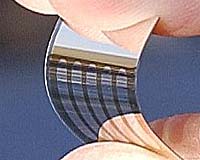
Dresden, Germany (SPX) Apr 08, 2008 Hand-held electronic books, super sharp flat-screen TVs, and solar cells that can be printed like newspaper: These are some of the innovations taking place in Germany and being featured at Printed Electronics Europe 2008, a leading industry conference in Dresden, Germany. Representatives from Invest in Germany will be in Dresden to present Germany's advantages as a location for printed electronics investments. Germany's expertise in industrial production, printing processes, and chemicals - all essential elements to printed electronics - make it a leading location for investments in this field. The density of expertise in Germany was one of the reasons that British-based Plastic Logic Limited, in a move that received international attention, chose Dresden for its EUR100 million manufacturing facility early in 2007. The world's first commercially viable polymer-based displays will now be produced in Germany. The technology allows end users to read books or newspapers in a hand-held electronic form. Organic electronics, another form of printed electronics, is playing an important role in the photovoltaics industry. For example, organic solar cells offer a thinner, more flexible, and potentially cheaper alternative to silicon cells, as these cells could practically be printed like a newspaper. Some experts expect this technology to be used by the building industry for roof installations in less than a decade. Another application of organic electronics is OLED technology (Organic light-emitting diodes). OLED displays are already in use with MP3 players and certain mobile phones. The technology, which offers a brilliant picture along with high contrast, could be integrated into televisions in coming years and also find broad applications in lighting and signage. Germany is a leading location for all aspects of the printed electronics industry and some parts of the country, specifically the Dresden area, have distinguished themselves for their expertise. Connections to suppliers and research institutes, e.g. the Fraunhofer Institute for Photonic Microsystems, are bringing leaders in printed electronics such as Plastic Logic and MicroEmissive Displays (MED) to the Dresden area. Community Email This Article Comment On This Article Related Links All About Solar Energy at SolarDaily.com
 Green Power Labs Introduces SOLARSATDATA
 Halifax, Canada (SPX) Apr 08, 2008
Acquiring accurate time- and site-specific solar irradiance data and high resolution solar radiation maps is a challenge for solar power/thermal energy producers, power utilities as well as other industries using solar energy data. Solar radiation maps are predominantly based on interpolation of historic ground station data which often fail to reflect fine spatial variability due to micro climates or local changes in weather patterns. |
|
|
| The content herein, unless otherwise known to be public domain, are Copyright Space.TV Corporation. AFP and UPI Wire Stories are copyright Agence France-Presse and United Press International. ESA Portal Reports are copyright European Space Agency. All NASA sourced material is public domain. Additional copyrights may apply in whole or part to other bona fide parties. Advertising does not imply endorsement, agreement or approval of any opinions, statements or information provided by Space.TV Corp on any Web page published or hosted by Space.TV Corp. Privacy Statement |