
 |
 |
 |
 |
 |
 |
 |
 |
 |

 |

Rosglas, France (AFP) May 26, 2011 It looks like any other another leafy woodland path in Brittany, but campaigners say ramblers on this particular trail may face levels of radiation at least 10 times higher than normal. The path runs alongside a disused uranium mine in the hamlet of Rosglas, one of over 200 suspect sites dotted across France, this one marked with just a makeshift sign drawn up by local anti-nuclear campaigners. When the leaders on the world's most powerful developed economies meet this week at the G8 summit to discuss the aftermath of Japan's Fukushima reactor disaster, France will urge them to keep faith with nuclear power. Some three-quarters of France's domestic power comes from nuclear plants, and the country is keen to export its expertise in the form of modern third generation EPR reactors -- which it insists are safe. But abandoned works like the one in Rosglas are testimony to an earlier era when France's race to join the atomic age employed more lax standards. "These sites were pretty much abandoned, vegetation has grown up over them, but the radiation is still there," Chantal Cuisnier of local anti-nuclear group Sortir du Nucl�aire Cornouaille told AFP. Cuisnier's group recently recorded levels of radiation up to 20 times above normal around the mine, which closed in the mid 1970s. The group's findings were validated in a report by France's respected Independent Research and Information Commission on Radioactivity (CRIIRAD). Today, the site is the responsibility of Areva, a majority state-owned French multinational that builds nuclear power stations and manages uranium mines around the world. "Radiation levels are very slightly higher than natural levels," said Areva spokesman Maxime Michaut, who argued that it would be surprising if this were not the case, given that Rosglas is a former uranium mine. The company says its figures show the levels are 10 times above normal, but insists the situation, "does not represent an immediate public health risk." Michaut also said Areva was monitoring all of the disused uranium mines it is responsible for in France, including Rosglas, and would take action on a case-by-case basis if necessary. Cuisnier is unconvinced by such arguments. "Any dose of radioactivity carries a risk of mutation or cancer. Here we are talking about levels that are ten to 20 times higher than normal on a public footpath for a distance of 500 metres," she said. The CRIIRAD is similarly critical of the situation. "These exposures are totally unjustified and levels should be reduced by properly redeveloping the site and removing radioactive material," the organisation warned in a 2008 report. Ange Le Lan the mayor of the nearby village of Meslan, in whose jurisdiction the abandoned mine falls shares some of the concern. "It's unfortunate that Areva has taken such a long time to look into the situation and that their actions came about as a result of activity by local environmental groups," he told AFP. Parents at the village school clearly seem uneasy about having a disused uranium mine in their back yard. "It's not always easy living in an area with uranium. I can't say I feel entirely comfortable," said one mother who had recently moved to Meslan and asked not to be named. "Nothing's been done at all. We've had no information, nothing's been done at the site, there's been no effort to clean things up. Nothing," added one angry father. France began operations at the first of its 200 or more uranium mines in 1946 and the majority of the sites were closed during the 1970s and 1980s although the last mine on French soil was working up until 2001. Most of the mines were not managed by Areva when they were working, but the company inherited responsibility for the sites from their former owners. In a 2005 report, CRIIRAD criticised the way they were being managed. "Uranium mining has caused significant contamination of the environment in violation of the international principles of radio protection," it said. Today, France imports fuel for its network of nuclear power stations, often from mines run by Areva in other parts of the world, notably Africa.
Share This Article With Planet Earth
Related Links Space Technology News - Applications and Research

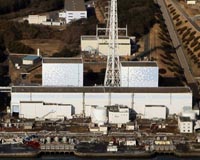 Radiation protection expert criticizes comparison of Fukushima to Chernobyl
London, UK (SPX) May 24, 2011 In the opening editorial to the latest edition of the Journal of Radiological Protection, published, Wednesday 18 May, radiological protection expert Professor Richard Wakeford of the Dalton Nuclear Institute, The University of Manchester, gives a detailed account of events at Fukushima Dai-ichi Nuclear Power Station, and poses several questions that remain unanswered, several weeks on from the ... read more |
|
|
| The content herein, unless otherwise known to be public domain, are Copyright 1995-2010 - SpaceDaily. AFP and UPI Wire Stories are copyright Agence France-Presse and United Press International. ESA Portal Reports are copyright European Space Agency. All NASA sourced material is public domain. Additional copyrights may apply in whole or part to other bona fide parties. Advertising does not imply endorsement,agreement or approval of any opinions, statements or information provided by SpaceDaily on any Web page published or hosted by SpaceDaily. Privacy Statement |


 del.icio.us
 Digg
Digg Reddit
 YahooMyWeb
 Google
 Facebook


