
 |
 |
 |
 |
 |
 |
 |
 |
 |

 |
Raytheon's Chandrayaan-1 Sensor Successfully Activated
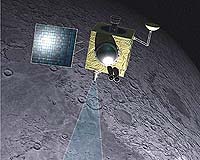
El Segundo CA (SPX) Dec 23, 2008 Raytheon has received confirmation from NASA and the Indian Space Research Organization that a water-detecting sensor system on the Chandrayaan-1 lunar-orbiting spacecraft has been activated and is fully functional. The assurance extends Raytheon's perfect 40-year record of start-up success. Data collected during an initial checkout will be used to calibrate the sensor. Under contract to the Naval Air Warfare Center Weapons Division, Raytheon provided the antenna, transmitter, analog receiver and software for the sensor system to Johns Hopkins University Applied Physics Laboratory, which then integrated the sensor system with the spacecraft. The company also supplied system engineering, integration and test support. The main mission of the system is to detect water at depths up to several meters in the frozen regions of the lunar poles. Operational data retrieval will begin several months after initial calibration to allow other on-board optical payloads to take advantage of favorable solar illumination conditions during the early phase of the program. "We are proud to be supporting this highly important Indian space mission and of our company's unblemished record of on-orbit sensor activation," said Brian Arnold, vice president for the Space Systems group of Raytheon. Share This Article With Planet Earth
Related Links Raytheon Mars News and Information at MarsDaily.com Lunar Dreams and more
 Moon's Polar Craters Could Be The Place To Find Lunar Ice
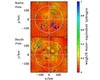 Durham, UK (SPX) Dec 23, 2008
Scientists have discovered where they believe would be the best place to find ice on the moon. Astrophysicists, led by an expert at Durham University, say if frozen water exists then it is most likely to be found near to the moon's poles in craters that are permanently shaded from the sun. |
|
|

| The content herein, unless otherwise known to be public domain, are Copyright 1995-2007 - SpaceDaily.AFP and UPI Wire Stories are copyright Agence France-Presse and United Press International. ESA Portal Reports are copyright European Space Agency. All NASA sourced material is public domain. Additional copyrights may apply in whole or part to other bona fide parties. Advertising does not imply endorsement,agreement or approval of any opinions, statements or information provided by SpaceDaily on any Web page published or hosted by SpaceDaily. Privacy Statement |
 del.icio.us
 Digg
Digg Reddit
 YahooMyWeb
 Google
 Facebook