
 |
 |
 |
 |
 |
 |
 |
 |
 |

 |
Removing invasive species on remote island unleashed disaster
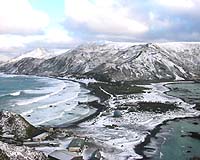
Paris (AFP) Jan 13, 2009 Efforts to remove an invasive species from a sub-Antarctic island that has been named a World Heritage site accidentally triggered an environmental catastrophe, a study published on Tuesday says. The eradication programme on Macquarie Island, lying halfway between Australia and Antarctica, is a cautionary tale about the complex web of ecosystems, its authors say. In the early 19th century, cats were introduced to Macquarie Island, where they swiftly became feral. In 1878, rabbits were brought in by seal hunters, according to the paper, which appears on Tuesday in the Journal of Applied Ecology, published by the British Ecological Society. By the late 1960s, the rabbit population had become so large, and so destructive of vegetation, that the Australian authorities used the Myxoma virus -- which causes the disease myxamotosis among rabbits -- to control their numbers. As a result, the rabbits dwindled, from a peak of 130,000 in 1978 to 20,000 in the 1980s, and the vegetation recovered. The downside: the cats, which had been tucking into the rabbits for food, turned to Macquarie's native burrowing birds for sustenance. Fearing that the birds would get wiped out, the authorities returned to the island in 1985 to launch a cat eradication programme. The cats were all killed in 2000, but myxamotosis had failed to do the same to the rabbits. Without their feline predators, the rabbit population surged anew and in just half a dozen years has inflicted enormous damage, in some places stripping the ground bare. In ecologists' terms, this is an example of "trophic cascades" -- when a species' abundance is significantly reduced or increased, the change resonates along the food chain. "Between 2000 and 2007 there has been widespread ecosystem devastation and decades of conservation effort compromised," said lead author Dana Bergstrom of the Australian Antarctic Division. "The lessons for conservation agencies globally is that interventions should be comprehensive, and include risk assessments to explicitly consider and plan for indirect effects, or face substantial subsequent costs." To fix the problems on Macquarie Island will cost around 24 million Australian dollars (17 million dollars, 12.6 million euros), the authors estimate. Macquarie is a long, narrow island 34 kilometres (21.25 miles) long by five kms (3.1 miles) wide with tundra-like vegetation that grows in its cool, maritime climate, as well as large numbers of birds, seals and penguins. The island was declared a wildlife sanctuary in 1933. It was named a World Heritage Site in 1997 because it is geologically unique: it is the only place where rocks from Earth's mantle, some six kilometers (3.75 miles) below the ocean floor, are directly exposed above sea level. Share This Article With Planet Earth
Related Links Darwin Today At TerraDaily.com
 Antibodies Take Evolutionary Leaps To Fight Microbes
 Los Angeles CA (SPX) Jan 13, 2009
With cold and flu season in full swing, the fact that viruses and bacteria rapidly evolve is apparent with every sneeze, sniffle, and cough. A new report in the January 2009 issue of The FASEB Journal, explains for the first time how humans keep up with microbes by rearranging the genes that make antibodies to foreign invaders. This research fills a significant gap in our understanding of how the immune system helps us survive. |
|
|

| The content herein, unless otherwise known to be public domain, are Copyright 1995-2007 - SpaceDaily.AFP and UPI Wire Stories are copyright Agence France-Presse and United Press International. ESA Portal Reports are copyright European Space Agency. All NASA sourced material is public domain. Additional copyrights may apply in whole or part to other bona fide parties. Advertising does not imply endorsement,agreement or approval of any opinions, statements or information provided by SpaceDaily on any Web page published or hosted by SpaceDaily. Privacy Statement |
 del.icio.us
 Digg
Digg Reddit
 YahooMyWeb
 Google
 Facebook