|
 |
 |
 |
 |
 |
 |
 |
 |

 |
Russian Hostages Freed In Nigeria
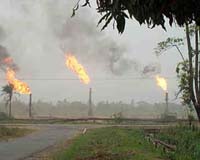
UPI Correspondent Miami (UPI) Aug 08, 2007 Six Russian hostages held by militants in the Niger Delta were freed after more than two months amid gang violence in Port Harcourt that left at least 15 dead. The six Russians were taken hostage June 3 while working at an aluminum factory run by Russian firm UC RUSAL, the No. 1 producer of aluminum in the world. The captives were among the more than 200 people abducted so far this year by militants and gangs that operate in the oil-rich delta with relative impunity. High unemployment in the delta, environmental degradation due to oil and gas extraction, and a lack of basic resources such as fresh water and electricity have angered the region's youth, who have taken up arms, many times supplied by political leaders. Nigerian Vice President Jonathan Goodluck this week called on private petroleum companies and public officials to ameliorate suffering in the delta and curb violence by creating more jobs for the region's youth. "This way, they (youth in the delta) can be gainfully employed and keep out of trouble," Goodluck said from the capital, Abuja. "While government is doing all within its power to address the volatile situation in the Niger Delta region, all stakeholders in the region must appreciate each other's position and resolve the issues amicably," he added. Since assuming power in May, Nigerian President Umaru Yar'Adua has called for calm in the delta and an end to the kidnappings that hamper the region's oil production. So far, his appeals have had little effect. However, at least one militant leader said he would heed Yar'Adua's call for peace as the new president tries to bring reform to the notoriously corrupt delta, where billions of dollars in annual oil revenue rarely trickle down to the impoverished majority, many of whom earn less than $1 a day. "The crisis in the Niger Delta commands our urgent attention," said Yar'Adua soon after assuming office. "Ending it is a matter of strategic importance to our country. I will use every resource available to me, with your help, to address this crisis in a spirit of fairness, justice, and cooperation." In June, Yar'Adua got a much-needed boost when militant leader Mujahid Dokubo-Asari praised the president's choice for vice president, Goodluck, who hails from the dominant Ijaw tribe in the delta, and said his addition to the president's ticket paved the way for the temporary cease-fire in the delta. "The majority of the Ijaw people are saying we should give Jonathan a chance, and we'll give him a chance," said Dokubo-Asari, who was released from prison after the election. "We'll halt attacks." The militant leader beloved by many Nigerian gunmen in the delta had earlier said he would "come after" those that had once imprisoned him. It's a much-needed reprieve for the president and the oil industry, whose production has decreased by 25 percent or more -- currently estimated at 2 million barrels a day -- due to the attacks. Militant groups like the Movement for the Emancipation of the Niger Delta have launched numerous attacks on both onshore and offshore oil installations hoping to bring attention to the plight of residents. Anger over their treatment at the hands of Nigeria's authorities erupted this week into gangland-style violence in Port Harcourt, where police tried to quell the violence that started Sunday.
Source: United Press International Community Email This Article Comment On This Article Related Links Powering The World in the 21st Century at Energy-Daily.com
 Time To Withdraw Iraq Oil Law
 Washington (UPI) Aug 07, 2007
Iraq's citizens suffer from the August heat, little electricity and fuel. Death is seemingly around every corner. So the time may not be right for an oil law, especially the one the Bush administration wants. United Press International has found a recurring theme over recent months during coverage of the Iraq oil law: creating a law governing the bloodline to Iraq's economy should be less of a priority than stopping the bloodletting of Iraq's citizens. |
|
|
| The content herein, unless otherwise known to be public domain, are Copyright Space.TV Corporation. AFP and UPI Wire Stories are copyright Agence France-Presse and United Press International. ESA Portal Reports are copyright European Space Agency. All NASA sourced material is public domain. Additional copyrights may apply in whole or part to other bona fide parties. Advertising does not imply endorsement, agreement or approval of any opinions, statements or information provided by Space.TV Corp on any Web page published or hosted by Space.TV Corp. Privacy Statement |