|
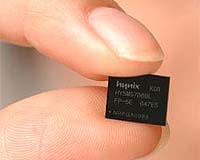
SKorea's Hynix closes old chip lines
Seoul (AFP) Sept 18, 2008 Hynix Semiconductor, the world's second-largest computer memory chip maker, said Thursday it would close two of its old chip production lines this month to improve efficiency. Chip makers have slashed output or retired old facilities as the global memory chip industry has been hit by a prolonged slump. Hynix has been retiring eight-inch (200 millimetre), wafer fabrication lines to move on to 12-inch lines. Of five eight-inch wafer lines, Hynix closed one in the US in August. It has already decided to stop operations at another eight-inch line in China by the end of the year. The company said it would also close two eight-inch lines in South Korea by the end of September. It said it would produce only 10 percent of its output from eight-inch lines by early next year, compared to 50 percent at the end of 2007. As a result, Hynix said its output of DRAM computer chips would be cut by 20 percent and NAND flash memory output by 40 percent. NAND flash memory refers to chips used mostly in digital cameras, USB flash drives, cell phones and music players. Community Email This Article Comment On This Article Related Links Computer Chip Architecture, Technology and Manufacture Nano Technology News From SpaceMart.com
 Intel rolls out computer chip with six brains
 San Francisco (AFP) Sept 15, 2008
Intel on Monday rolled out its first chip with six brains, unveiling a "multi-core" microprocessor that boosts computing muscle while cutting back on electricity use. |
|
|
| The content herein, unless otherwise known to be public domain, are Copyright Space.TV Corporation. AFP and UPI Wire Stories are copyright Agence France-Presse and United Press International. ESA Portal Reports are copyright European Space Agency. All NASA sourced material is public domain. Additional copyrights may apply in whole or part to other bona fide parties. Advertising does not imply endorsement, agreement or approval of any opinions, statements or information provided by Space.TV Corp on any Web page published or hosted by Space.TV Corp. Privacy Statement |