
 |
 |
 |
 |
 |
 |
 |
 |
 |

 |

Huntsville AL (SPX) Oct 04, 2010 Dr. Jonathan Cirtain, an astrophysicist at NASA's Marshall Space Flight Center in Huntsville, Ala., and his science team have secured a proposal award of $8.2 million to help build parts for and test an instrument for the Solar Probe Plus flagship mission to directly sample the Sun's atmosphere. NASA recently announced the development of a mission to visit and study the Sun - up close and personal. The unprecedented Solar Probe Plus mission is slated to launch no later than 2018. "This is the equivalent of a Hubble-class mission for solar physics," said Cirtain, the Marshall lead for the proposed "Solar Wind Electrons Alphas and Protons" instrument, or SWEAP. "We expect the data collected on this mission to have a dramatic and revolutionary impact on the field of solar astrophysics." Solar Probe Plus promises to transform our understanding of the Sun and its effects on the solar system. It will explore a region no other spacecraft has ever encountered. Cirtain's team consists of scientists from the Marshall Center and the University of Alabama in Huntsville. Marshall's Science and Mission Systems Office and Engineering Directorate also are partnering with the Smithsonian Astrophysical Observatory of Cambridge, Mass., the lead on the proposal, and the University of California at Berkeley. Cirtain and his team now are developing instrument prototypes for the mission. These instruments will specifically count the most abundant particles in the solar wind - electrons, protons and helium ions - and measure their properties. The investigation also is designed to sweep up the solar wind in a special conductive metal cup, called a Faraday cup, and determine the speed and direction of the Sun's particles. The Huntsville team is partnered with the Smithsonian Astrophysical Observatory for the development of the instruments. "While other instruments are hidden, we'll be right out there getting blasted by the Sun, literally "touching" a star for the first time," said Justin Kasper, SWEAP principal investigator and a Smithsonian astronomer. Solar Probe Plus is a spacecraft the size of a small car that will plunge directly into the Sun's atmosphere, approximately four million miles from the physical surface of the star. It will explore a region no other spacecraft has ever encountered. "The experiments selected for Solar Probe Plus are specifically designed to solve two key questions of solar physics: Why is the Sun's outer atmosphere so much hotter than the Sun's visible surface, and what propels the solar wind that affects Earth and our solar system?" said Dick Fisher, director of NASA's Heliophysics Division in Washington. "We have been struggling with these questions for decades and this mission should finally provide those answers."
Share This Article With Planet Earth
Related Links Living with the Star Program Solar Science News at SpaceDaily

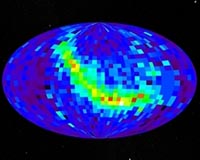 Solar system's shield is showing cracks
 San Antonio (UPI) Oct 2, 2010 The outer boundary of the solar system is more dynamic and complex than ever imagined, astronomers said. The Interstellar Boundary Explorer satellite, launched two years ago, is studying the heliosphere, the invisible bubble far beyond the planetary orbits where the solar wind meets the particles and radiation that fill interstellar space, researchers told the Los Angeles Times. ... read more |
|
|
| The content herein, unless otherwise known to be public domain, are Copyright 1995-2010 - SpaceDaily. AFP and UPI Wire Stories are copyright Agence France-Presse and United Press International. ESA Portal Reports are copyright European Space Agency. All NASA sourced material is public domain. Additional copyrights may apply in whole or part to other bona fide parties. Advertising does not imply endorsement,agreement or approval of any opinions, statements or information provided by SpaceDaily on any Web page published or hosted by SpaceDaily. Privacy Statement |


 del.icio.us
 Digg
Digg Reddit
 YahooMyWeb
 Google
 Facebook


