
 |
 |
 |
 |
 |
 |
 |
 |
 |

 |
Scientists try to build a synthetic brain
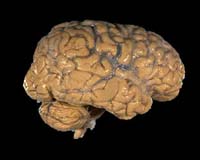
Los Angeles (UPI) Jan 27, 2009 U.S. scientists say they are attempting to build neurons from carbon nanotubes to emulate human brain function. "At this point we still don't know if building a synthetic brain is feasible," said University of Southern California Professor Alice Parker. "It may take decades to realize anything close to the human brain, but emulating pieces of the brain -- such as a synthetic vision system or synthetic cochlea that interface successfully with a real brain -- may be available quite soon, and synthetic parts of the brain's cortex within decades." She said the challenges of creating a synthetic brain are staggering. Unlike computer software that simulates brain function, a synthetic brain will include hardware that emulates brain cells, their amazingly complex connectivity and a concept Parker calls "plasticity," which allows the artificial neurons to learn through experience and adapt to changes in their environment the way real neurons do. Currently, the scientists are creating mathematical models that accurately reflect the connections of all the neurons and demonstrate how the connections allow neurons to communicate with each other. "It's a non-linear phenomenon and almost impossible to model, but that's what we're attempting to do," Parker said. The research is funded by the National Science Foundation. Share This Article With Planet Earth
Related Links All About Human Beings and How We Got To Be Here
 Pacific People Spread From Taiwan
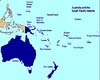 Auckland, NZ (SPX) Jan 23, 2009
New research into language evolution suggests most Pacific populations originated in Taiwan around 5,200 years ago. Scientists at The University of Auckland have used sospisticated computer analyses on vocabulary from 400 Austronesian languages to uncover how the Pacific was settled. |
|
|

| The content herein, unless otherwise known to be public domain, are Copyright 1995-2007 - SpaceDaily.AFP and UPI Wire Stories are copyright Agence France-Presse and United Press International. ESA Portal Reports are copyright European Space Agency. All NASA sourced material is public domain. Additional copyrights may apply in whole or part to other bona fide parties. Advertising does not imply endorsement,agreement or approval of any opinions, statements or information provided by SpaceDaily on any Web page published or hosted by SpaceDaily. Privacy Statement |
 del.icio.us
 Digg
Digg Reddit
 YahooMyWeb
 Google
 Facebook