
 |
 |
 |
 |
 |
 |
 |
 |
 |

 |

San Diego CA (SPX) Mar 07, 2011 Warming temperatures and melting ice in the Arctic may be behind a progressively earlier bloom of a crucial annual marine event, and the shift could hold consequences for the entire food chain and carbon cycling in the region. Scientists at Scripps Institution of Oceanography at UC San Diego, along with colleagues in Portugal and Mexico, plotted the yearly spring bloom of phytoplankton-tiny plants at the base of the ocean food chain-in the Arctic Ocean and found the peak timing of the event has been progressing earlier each year for more than a decade. The researchers analyzed satellite data depicting ocean color and phytoplankton production to determine that the spring bloom has come up to 50 days earlier in some areas in that time span. The earlier Arctic blooms have roughly occurred in areas where ice concentrations have dwindled and created gaps that make early blooms possible, say the researchers, who publish their findings in the March 9 edition of the journal Global Change Biology. During the one- to two-week spring bloom, which occurs in warm as well as cold regions, a major influx of new organic carbon enters the marine ecosystem through a massive peak in phytoplankton photosynthesis, which converts carbon dioxide into organic matter as part of the global carbon cycle. Phytoplankton blooms stimulate production of zooplankton, microscopic marine animals, which become a food source for fish. Mati Kahru, lead author of the study and a research oceanographer in the Integrative Oceanography Division at Scripps, said it's not clear if the consumers of phytoplankton are able to match the earlier blooms and avoid disruptions of their critical life-cycle stages such as egg hatching and larvae development. "The spring bloom provides a major source of food for zooplankton, fish and bottom-dwelling animals," he said. "The advancement of the bloom time may have consequences for the Arctic ecosystem." Such a match or mismatch in timing could explain much of the annual variability of fish stocks in the region. "The trend towards earlier phytoplankton blooms can expand into other areas of the Arctic Ocean and impact the whole food chain," say the authors, who used satellite data from 1997-2010 to create their bloom maps. The NASA Ocean Biology and Biogeochemistry Program and the National Science Foundation provided financial support for the research. The satellite data were provided by the NASA Ocean Biology Processing Group, ESA GlobColour group, the National Snow and Ice Data Center and the Japan Aerospace Exploration Agency. Kahru's coauthors include Greg Mitchell, a Scripps Oceanography research biologist, Vanda Brotas of the University of Lisbon in Portugal and Marlenne Manzano-Sarabia of Universidad Autonoma de Sinaloa in Mexico.
Share This Article With Planet Earth
Related Links University of California - San Diego Beyond the Ice Age

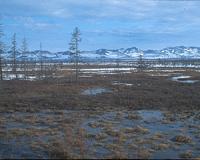 Shrinking Tundra, Advancing Forests: How The Arctic Will Look By Century's End
Lincoln NE (SPX) Mar 07, 2011 Imagine the vast, empty tundra in Alaska and Canada giving way to trees, shrubs and plants typical of more southerly climates. Imagine similar changes in large parts of Eastern Europe, northern Asia and Scandinavia, as needle-leaf and broadleaf forests push northward into areas once unable to support them. Imagine part of Greenland's ice cover, once thought permanent, receding and leaving new tu ... read more |
|
|
| The content herein, unless otherwise known to be public domain, are Copyright 1995-2010 - SpaceDaily. AFP and UPI Wire Stories are copyright Agence France-Presse and United Press International. ESA Portal Reports are copyright European Space Agency. All NASA sourced material is public domain. Additional copyrights may apply in whole or part to other bona fide parties. Advertising does not imply endorsement,agreement or approval of any opinions, statements or information provided by SpaceDaily on any Web page published or hosted by SpaceDaily. Privacy Statement |


 del.icio.us
 Digg
Digg Reddit
 YahooMyWeb
 Google
 Facebook


