
 |
 |
 |
 |
 |
 |
 |
 |
 |

 |
Sensors for combat helmets could gather blast data
Washington (AFP) Nov 25, 2008 The US Navy is developing sensors for combat helmets to measure the force of roadside explosions and gather data that might be useful in treating traumatic brain injury, a researcher said Tuesday. David Mott, a researcher at Naval Research Laboratory, presented findings showing that helmets, while providing protection against blasts, channel the shock wave to different parts of the head. "The medical community does not really understand what causes TBI (traumatic brain injury). There are some theories regarding direct pressure on the head. There are other theories regarding cumulative effects of lower level explosions," he said. With the helmet sensor being developed, a Marine would have a history of all the blasts to which he or she was exposed over the course of a deployment, he said in a telephone interview from a scientific conference at San Antonio, Texas. "It will record pressure history as well as accleration, which will give us an idea of the severity and directionality of the blast," he said. The helmet ideally would stay with the same marine over the course of a deployment, he said. "So you would get a total history of every event they have been involved with whether it was severe enough that they went to the medic or whatever it was," he said. "Down the road if health issues come up, or there is some other event you'll have that history and maybe you'll be able to relate it to what other type of injuries you may have. Mott said prototypes of the sensor have been developed, but the project was still in the research and development phase. The findings he presented at the American Physical Society's Division of Fluid Dynamics in San Antonio drew from research conducted by teams at NRL and Canadian Allen-Vanguard Technologies. The teams examined what happens when 1.5 kilograms of C-4 explosives detonates within meters of a crash dummy wearing a combat helmet with sensors. Mott then modeled the fluid dynamics of the shock wave and found that it entered the gap between the helmet and the head and traveled about the head. The helmet provided protection to the side of the head facing the blast, he said. "But it gathered some of the wave that comes underneath in that gap and it can cause higher pressure on the backside of the head," he said. "The pressure that is produced on that backside is comparable to what that incident wave would produce on an unprotected surface," he said. He said the impact was not likely to be as severe on a human because there were differences in the case of a crash dummy that were not taken into account in the model. Share This Article With Planet Earth
Related Links The latest in Military Technology for the 21st century at SpaceWar.com
 Arnold Engineers Test Army Weapon To Evaluate Its Capability
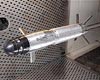 Arnold AFB TN (SPX) Nov 20, 2008
Arnold Air Force Base engineers conducted an aerodynamic test on the Army's Mid-Range Munition recently that provided a new and critically needed performance evaluation capability for current and potential test customers. |
|
|

| The content herein, unless otherwise known to be public domain, are Copyright 1995-2007 - SpaceDaily.AFP and UPI Wire Stories are copyright Agence France-Presse and United Press International. ESA Portal Reports are copyright European Space Agency. All NASA sourced material is public domain. Additional copyrights may apply in whole or part to other bona fide parties. Advertising does not imply endorsement,agreement or approval of any opinions, statements or information provided by SpaceDaily on any Web page published or hosted by SpaceDaily. Privacy Statement |
 del.icio.us
 Digg
Digg Reddit
 YahooMyWeb
 Google
 Facebook