
 |
 |
 |
 |
 |
 |
 |
 |
 |

 |
Smugglers target Indonesia's rare Javan hawk: official
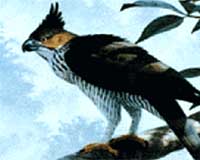
Kuala Lumpur (AFP) Feb 6, 2009 Indonesia's national icon -- the Javan hawk-eagle -- has become the target of illegal traders after being declared a nationally at risk species in Indonesia, a wildlife watchdog warned Friday. The Javan hawk-eagle is considered one of the world's rarest birds, according to Malaysia-based TRAFFIC, a wildlife body that works to ensure that trade in wild plants and animals does not pose a conservation threat. "Our study suggests that highlighting the Javan Hawk-eagle's plight and making it an icon for Indonesia's wildlife may actually have been the main reason behind an increase in its illegal trade," said Chris Shepherd, senior programme officer for TRAFFIC Southeast Asia in a statement. In 1993, the Javan Hawk-eagle, an endangered species, was declared Indonesia's national rare animal by former President Suharto. Shepherd said in the last 20 years, 70 Javan Hawk-eagles have been recorded in trade, the majority of them in recent years. "Interest in the Javan Hawk-eagle led to a demand for birds in zoo and private collections, with evidence of eagles being smuggled abroad. The species has never bred in captivity," he said. Shepherd said raising the profile and awareness of threatened wildlife "needs to go hand-in-hand with effective implementation and enforcement of laws to protect the species concerned". Southeast Asia is a major centre for the wildlife trade, both as a supplier and consumer of wildlife products. The region includes some of the world's poorest countries, where the rich biodiversity is exploited by communities to eke out an existence. Share This Article With Planet Earth
Related Links Darwin Today At TerraDaily.com
 EU seeks teeth to protect sharks
 Brussels (AFP) Feb 5, 2009
The EU Commission on Thursday proposed tighter rules to protect sharks, including obliging fishermen to throw back sharks caught accidentally, but Green groups expressed doubts about the moves. |
|
|

| The content herein, unless otherwise known to be public domain, are Copyright 1995-2007 - SpaceDaily.AFP and UPI Wire Stories are copyright Agence France-Presse and United Press International. ESA Portal Reports are copyright European Space Agency. All NASA sourced material is public domain. Additional copyrights may apply in whole or part to other bona fide parties. Advertising does not imply endorsement,agreement or approval of any opinions, statements or information provided by SpaceDaily on any Web page published or hosted by SpaceDaily. Privacy Statement |
 del.icio.us
 Digg
Digg Reddit
 YahooMyWeb
 Google
 Facebook