
 |
 |
 |
 |
 |
 |
 |
 |
 |

 |

Mesa AZ (SPX) Aug 26, 2010 Timescales of early Solar System processes rely on precise, accurate and consistent ages obtained with radiometric dating. However, recent advances in instrumentation now allow scientists to make more precise measurements, some of which are revealing inconsistencies in the ages of samples. Seeking better constraints on the age of the Solar System, Arizona State University researchers Audrey Bouvier and Meenakshi Wadhwa analyzed meteorite Northwest Africa (NWA) 2364 and found that the age of the Solar System predates previous estimates by up to 1.9 million years. By using a dating technique known as lead-lead dating, Bouvier and Wadhwa were able to calculate the age of a calcium-aluminum-rich inclusion (CAI) contained within the Northwest Africa 2364 chondritic meteorite. These CAIs are thought to be the first solids to condense from the cooling protoplanetary disk during the birth of the Solar System. The study's findings, published online in Nature Geoscience, fix the age of the Solar System at 4.5682 billion years old, between 0.3 and 1.9 million years older than previous estimates. This relatively small revision to the currently accepted age of about 4.56 billion years is significant since some of the most important events that shaped the Solar System occurred within the first ~10 million years of its formation. "This relatively small age adjustment means that there was as much as twice the amount of iron-60, a certain short-lived isotope of iron, in the early Solar System than previously determined. This higher initial abundance of this isotope in the Solar System can only be explained by supernova injection," said Bouvier, a faculty research associate in the School of Earth and Space Exploration (SESE) in ASU's College of Liberal Arts and Sciences. "This supernova event, and possibly others, could have triggered the formation of the Solar System. By studying meteorites and their isotopic characteristics, we bring new clues about the stellar environment of our Sun at birth." According to Meenakshi Wadhwa, professor in SESE and director of the Center for Meteorite Studies, "This work also helps to resolve some long-standing inconsistencies in early Solar System time scales as obtained by different high-resolution chronometers. However, there is certainly room for future studies. In particular, it will be important to conduct high precision chronologic investigations of CAIs from other pristine meteorites. We also need to understand the reasons for why the CAIs measured previously from two other chondritic meteorites, Allende and Efremovka, have yielded younger ages." One significant aspect of this study is that it is the first published lead-lead isotopic investigation that takes into account the possible variation of the uranium isotope composition. Earlier work conducted in Wadhwa's laboratory by ASU graduate student Gregory Brennecka, in collaboration with SESE professor Ariel Anbar, has shown that the uranium isotope composition of CAIs, long assumed to be constant, can in fact be highly variable and this has important implications for the calculation of the precise lead-lead ages of these objects. Using the relationship demonstrated by Brennecka and colleagues between the uranium isotope composition and other geochemical indicators in CAIs, Bouvier and Wadhwa inferred a uranium isotope composition for the CAI for which they reported the lead-lead age. Future work at ASU will focus on development of analytical techniques for the direct measurement of the precise uranium isotope composition of CAIs for which lead-lead isotopic investigations are being conducted. "Our work can help researchers better understand the sequence of events that took place within the first few million years of the Solar system formation, such as the accretion and melting of planetary bodies," Bouvier said. "All these processes happened extremely rapidly, and only by reaching such a precision on isotopic measurements and chronology can we find out about these processes of planetary formation."
Share This Article With Planet Earth
Related Links Arizona State University Stellar Chemistry, The Universe And All Within It

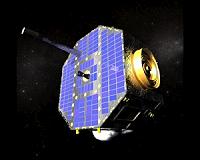 IBEX Maps The Boundaries
Moffett Field CA (SPX) Aug 19, 2010 Since its October 2008 launch, NASA's Interstellar Boundary Explorer (IBEX) spacecraft has mapped the invisible interactions occurring at the edge of the solar system. The images reveal that the interactions between our home in the galaxy and interstellar space are surprisingly structured and intense. IBEX provides global imaging of the interstellar boundary much like a weather satellite p ... read more |
|
|
| The content herein, unless otherwise known to be public domain, are Copyright 1995-2010 - SpaceDaily. AFP and UPI Wire Stories are copyright Agence France-Presse and United Press International. ESA Portal Reports are copyright European Space Agency. All NASA sourced material is public domain. Additional copyrights may apply in whole or part to other bona fide parties. Advertising does not imply endorsement,agreement or approval of any opinions, statements or information provided by SpaceDaily on any Web page published or hosted by SpaceDaily. Privacy Statement |


 del.icio.us
 Digg
Digg Reddit
 YahooMyWeb
 Google
 Facebook


