
 |
 |
 |
 |
 |
 |
 |
 |
 |

 |
Station Astronauts Lose Alarming Amounts Of Hipbone Strength
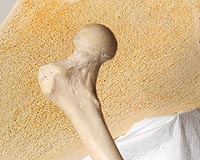
Irvine CA (SPX) Jan 27, 2009 Astronauts spending months in space lose significant bone strength, making them increasingly at risk for fractures later in life. UC Irvine and UC San Francisco led a study evaluating 13 astronauts who spent four to six months on the International Space Station and found that, on average, astronauts' hipbone strength decreased 14 percent. Three astronauts experienced losses of 20 percent to 30 percent, rates comparable to those seen in older women with osteoporosis. These results alarmed researchers because they revealed a greater rate of bone deterioration than previously measured using less powerful technologies. "If preventive measures are not taken, some of our astronauts may be at increased risk for age-related fractures decades after their missions," said study leader Joyce Keyak, UCI orthopedic surgery and biomedical engineering professor. For as long as there have been astronauts, researchers have studied why the microgravitational environment of space makes bones more fragile. While previous studies looked at bone mineral density, this study is the first to specifically evaluate bone strength. Keyak and her colleagues used a novel computer program she developed over the past 20 years to identify hipbone fracture risk in people with osteoporosis. The study team used this program to analyze structurally the hipbone CT scans of one female and 12 male International Space Center crewmembers. The decrease in bone strength measured between 0.6 percent and 5.0 percent for each month of service on the station, Keyak said, which was noticeably greater than monthly reductions in bone mineral density of 0.4 percent to 1.8 percent observed in previous studies on the same subjects. Orthopedic researchers looking into the effects of long-duration spaceflight usually study the hipbone or spine. The hip experiences the greatest rate of bone loss in space, and a hip fracture almost always requires hospitalization and major surgery. It can impair a person's ability to walk unassisted and may cause prolonged or permanent disability or even death. Fractures of the vertebra also have serious consequences, including loss of height, severe back pain and deformity. Along with Keyak, Alain K. Koyama, Ying Lu and Thomas F. Lang of UC San Francisco, and Adrian Leblanc of the Universities Space Research Association in Houston participated in the NASA-funded study. Study results appear in the online version of Bone. Share This Article With Planet Earth
Related Links Joyce Keyak Spotlight Space Medicine Technology and Systems
 Manipulating Salmonella In Spaceflight Curtails Infectiousness
 Tempe AZ (SPX) Dec 15, 2008
Infectious pathogens like Salmonella typhimurium employ a startling array of techniques to skillfully outwit the body's defense mechanisms and produce illness. Through their expression of genes-the fundamental building blocks of cellular physiology-such microbes ingeniously adapt to varied environments, modifying their disease-causing potential or virulence. |
|
|

| The content herein, unless otherwise known to be public domain, are Copyright 1995-2007 - SpaceDaily.AFP and UPI Wire Stories are copyright Agence France-Presse and United Press International. ESA Portal Reports are copyright European Space Agency. All NASA sourced material is public domain. Additional copyrights may apply in whole or part to other bona fide parties. Advertising does not imply endorsement,agreement or approval of any opinions, statements or information provided by SpaceDaily on any Web page published or hosted by SpaceDaily. Privacy Statement |
 del.icio.us
 Digg
Digg Reddit
 YahooMyWeb
 Google
 Facebook