
 |
 |
 |
 |
 |
 |
 |
 |
 |

 |
Study: Flora not flourishing in tropics
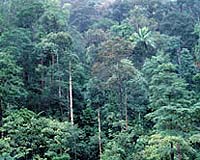
Calgary, Alberta (UPI) Dec 17, 2008 Canadian researchers say they've determined extinction risks for plants growing in the Earth's tropical regions are higher than previously thought. University of Calgary Assistant Professors Jana and Steven Vamosi studied plant extinction risks in areas close to the equator. "The tropics contain many ancient species of plants, leading many to consider tropical species as less susceptible to extinction," said Steven Vamosi. "But our study indicates that quite the opposite is, in fact, the case. The extinction risk for plants is high in countries close to the equator and even higher on islands, even after we take into account factors related to human activities and their use of the natural resources." The study focused on the number of plant species at risk, looking at human factors such as population density and deforestation. "Our findings differ from previous ones in that factors tightly linked to human activity were not particularly important in determining how many plant species were threatened with extinction," he said. "Instead, the most important factor seemed to be simply latitude. So, extinction dynamics may be very different between plant and animal species. Plant species near the equator may persist at naturally low population sizes or have small ranges, making them intrinsically more susceptible to a given amount of disturbance." The research is reported in the online journal PLoS One. Share This Article With Planet Earth
Related Links Darwin Today At TerraDaily.com
 Migratory birds face peril in Lebanon sanctuary
 Beirut (AFP) Dec 18, 2008
Lebanon, one of the world's key migratory bird corridors, has turned into a death trap for the avian population due to illegal hunting of increasingly rare species. |
|
|

| The content herein, unless otherwise known to be public domain, are Copyright 1995-2007 - SpaceDaily.AFP and UPI Wire Stories are copyright Agence France-Presse and United Press International. ESA Portal Reports are copyright European Space Agency. All NASA sourced material is public domain. Additional copyrights may apply in whole or part to other bona fide parties. Advertising does not imply endorsement,agreement or approval of any opinions, statements or information provided by SpaceDaily on any Web page published or hosted by SpaceDaily. Privacy Statement |
 del.icio.us
 Digg
Digg Reddit
 YahooMyWeb
 Google
 Facebook