
 |
 |
 |
 |
 |
 |
 |
 |
 |

 |
Study Reveals Hazards Of Severe Space Weather
Washington DC (SPX) Jan 08, 2009 A NASA-funded study describes how extreme solar eruptions could have severe consequences for communications, power grids and other technology on Earth. The National Academy of Sciences in Washington conducted the study. The resulting report provides some of the first clear economic data that effectively quantifies today's risk of extreme conditions in space driven by magnetic activity on the sun and disturbances in the near-Earth environment. Instances of extreme space weather are rare and are categorized with other natural hazards that have a low frequency but high consequences. "Obviously, the sun is Earth's life blood," said Richard Fisher, director of the Heliophysics division at NASA Headquarters in Washington. "To mitigate possible public safety issues, it is vital that we better understand extreme space weather events caused by the sun's activity." Besides emitting a continuous stream of plasma called the solar wind, the sun periodically releases billions of tons of matter called coronal mass ejections. These immense clouds of material, when directed toward Earth, can cause large magnetic storms in the magnetosphere and upper atmosphere. Such space weather can affect the performance and reliability of space-borne and ground-based technological systems. Space weather can produce solar storm electromagnetic fields that induce extreme currents in wires, disrupting power lines, causing wide-spread blackouts and affecting communication cables that support the Internet. Severe space weather also produces solar energetic particles and the dislocation of the Earth's radiation belts, which can damage satellites used for commercial communications, global positioning and weather forecasting. Space weather has been recognized as causing problems with new technology since the invention of the telegraph in the 19th century. A catastrophic failure of commercial and government infrastructure in space and on the ground can be mitigated through raising public awareness, improving vulnerable infrastructure and developing advanced forecasting capabilities. Without preventive actions or plans, the trend of increased dependency on modern space-weather sensitive assets could make society more vulnerable in the future. NASA requested the study to assess the potential damage from significant space weather during the next 20 years. National and international experts from industry, government and academia participated in the study. The report documents the possibility of a space weather event that has societal effects and causes damage similar to natural disasters on Earth. "From a public policy perspective, it is quite significant that we have begun the extremely challenging task of assessing space weather impacts in a quantitative way," said Daniel Baker, professor and director of the Laboratory for Atmospheric and Space Physics at the University of Colorado in Boulder. Baker chaired the panel that prepared the report. "Whether it is terrestrial catastrophes or extreme space weather incidents, the results can be devastating to modern societies that depend in a myriad of ways on advanced technological systems," said Baker. "We were delighted that NASA helped support bringing together dozens of world experts from industry and government to share their experiences and begin planning of improved public policy strategies." The sun is currently near the minimum of its 11-year activity cycle. It is expected that solar storms will increase in frequency and intensity toward the next solar maximum, expected to occur around 2012. Share This Article With Planet Earth
Related Links National Academy of Sciences' complete report Heliophysics at NASA Solar Science News at SpaceDaily
 Explore The Entire Region Of The Sun's Influence
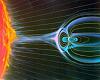 Greenbelt MD (SPX) Dec 23, 2008
Have you ever wondered how much data exists about the sun and how it affects the solar system and beyond? Data sets and images returned from NASA's cadre of space physics spacecraft, known collectively as the Heliophysics Great Observatory, now can be accessed through one convenient location at the Heliophysics Data Environment (HPDE) web site. |
|
|

| The content herein, unless otherwise known to be public domain, are Copyright 1995-2007 - SpaceDaily.AFP and UPI Wire Stories are copyright Agence France-Presse and United Press International. ESA Portal Reports are copyright European Space Agency. All NASA sourced material is public domain. Additional copyrights may apply in whole or part to other bona fide parties. Advertising does not imply endorsement,agreement or approval of any opinions, statements or information provided by SpaceDaily on any Web page published or hosted by SpaceDaily. Privacy Statement |
 del.icio.us
 Digg
Digg Reddit
 YahooMyWeb
 Google
 Facebook