
 |
 |
 |
 |
 |
 |
 |
 |
 |

 |

Paris, France (ESA) Jan 14, 2011 ESA astronaut Paolo Nespoli, now working as a flight engineer on the International Space Station, is busy with a range of scientific experiments. The latest is peering inside his head to help understand how the human brain works. Our brains are changing all the time - nerves are rearranging themselves and the connections between the nerve cells are reforming as the brain memorises new information, stores the old and continuously adapts to new situations. New experiences, learning, physiological changes, sleep disturbance and fatigue are among the most influential factors. Sometimes, especially after an accident or a cerebral stroke, the recover power of brain tissue is simply mind-boggling: the remaining healthy tissue can take over the functions of damaged areas.
Space is a stress factor Adapting to the multitudinous effects that gravity has on the human body and the way the brain deals with them is perhaps the greatest demand that the nervous system has to face in space. The increased load on the cognitive capacity is accompanied by a multitude of stresses on the brain. On 21 December, his second full working day on the Station, Paolo set up the Neurospat experiment with assistance from crewmate Cady Coleman. Neurospat aims to detect the brain's mechanisms involved in the altered behaviour in weightlessness and to locate the crucial parts of the cerebral cortex.
Helping life on Earth By recording this activity, European scientists are probing the activity that underlies cognitive processes involved in four different tasks: visual-motor tracking, perception of how the body is oriented, 3D navigation and discriminating the orientation of objects.
Share This Article With Planet Earth
Related Links ISS Expedition 26 (NASA)In depth Space Tourism, Space Transport and Space Exploration News

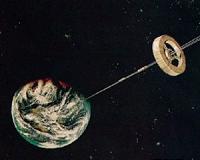 An Escalator To Space - Not Very Far Away
Chennai, India (PTI) Jan 10, 2011 The day may not be far away when an elevator attendant asks your preferred destination - low earth orbit (LEO) or geostationary orbit (GSO). Research is fast progressing in advanced countries on designing a space elevator, according to an Indian space expert. "Space scientists and engineers are looking at the possibility of designing an elevator to travel into space. It is also time that I ... read more |
|
|
| The content herein, unless otherwise known to be public domain, are Copyright 1995-2010 - SpaceDaily. AFP and UPI Wire Stories are copyright Agence France-Presse and United Press International. ESA Portal Reports are copyright European Space Agency. All NASA sourced material is public domain. Additional copyrights may apply in whole or part to other bona fide parties. Advertising does not imply endorsement,agreement or approval of any opinions, statements or information provided by SpaceDaily on any Web page published or hosted by SpaceDaily. Privacy Statement |


 del.icio.us
 Digg
Digg Reddit
 YahooMyWeb
 Google
 Facebook


