
 |
 |
 |
 |
 |
 |
 |
 |
 |

 |
Supermassive Black Holes Not Guilty Of Gluttony
New Haven CT (SPX) Jan 23, 2009 A team of Yale University astronomers has discovered that galaxies stop forming stars long before their central supermassive black holes reach their most powerful stage, meaning the black holes can't be responsible for shutting down star formation. Until recently, astronomers believed that active galactic nuclei (AGN)-the supermassive, extremely energetic black holes at the centers of many young galaxies-were responsible for shutting down star formation in their host galaxies once they grew large enough. It was thought that AGN feed on the surrounding galactic material, producing enormous amounts of energy (expelled in the form of light) and heat the surrounding material so that it can no longer cool and condense into stars. But new research shows that this shutting-down process appears to take place much earlier in the AGN's lifetime, well before it starts shining brightly. "This high-luminosity phase, when the AGN are at their biggest and brightest and most powerful, is not the phase responsible for the shutdown of star formation," said Kevin Schawinski, a postdoctoral associate in Yale's astronomy department and lead author of the study, published in the Feb. 10 issue of the Astrophysical Journal Letters. The researchers analyzed images of 177 galaxies taken by two different space telescopes to create a comprehensive view of galaxies with AGN, including ones where the AGN were both obscured by the galaxy's dust and gas, and ones where there was an unobstructed view of the AGN from the Earth's vantage point. Until now, some astronomers believed they can't see AGN in any galaxies that are still actively forming stars simply because the light from the AGN is obscured by the galaxy's gas and dust. Schawinski and his team are the first to show that in fact there are no bright AGN at the centers of star-forming galaxies. By subtracting out the light from the AGN, the team discovered that all of the galaxies with bright AGN had stopped forming stars several hundred million years earlier. "The key result is the finding that there is a lack of AGN in galaxies that are currently forming stars," said Meg Urry, head of the Yale team and director of the Yale Center for Astronomy and Astrophysics. "That tells us the AGN doesn't turn on until long after the stars stop forming." "For the first time, we've measured a real delay between the end of star formation and the onset of a luminous AGN," said Schawinski. As for the real culprit, responsible for shutting down star formation, "it's possible that an earlier, low-luminosity phase is responsible," he said. "Either way, this result shows that our previous understanding of how the shutting-down process works wasn't as simple as we thought." Authors of the paper include Kevin Schawinski, Shanil Virani, Brooke Simmons, Megan Urry and Bronika Kushkuley (all of Yale University), as well as Ezequiel Treister (University of Hawaii) and Sugata Kaviraj (University of Oxford). Share This Article With Planet Earth
Related Links - Understanding Time and Space
 Cookie Cutter In The Sky
 New York NY (SPX) Dec 19, 2008
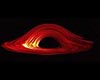
Black holes can now be thought of as donut holes. The shape of material around black holes has been seen for the first time: an analysis of over 200 active galactic nuclei-cores of galaxies powered by disks of hot material feeding a super-massive black hole-shows that all have a consistent, ordered physical structure that seems to be independent of the black hole's size. |
|
|

| The content herein, unless otherwise known to be public domain, are Copyright 1995-2007 - SpaceDaily.AFP and UPI Wire Stories are copyright Agence France-Presse and United Press International. ESA Portal Reports are copyright European Space Agency. All NASA sourced material is public domain. Additional copyrights may apply in whole or part to other bona fide parties. Advertising does not imply endorsement,agreement or approval of any opinions, statements or information provided by SpaceDaily on any Web page published or hosted by SpaceDaily. Privacy Statement |
 del.icio.us
 Digg
Digg Reddit
 YahooMyWeb
 Google
 Facebook