|
 |
 |
 |
 |
 |
 |
 |
 |

 |
Surgery By Satellite Offers New Possibilities At Cutting Edge Of Medicine
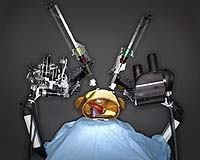
London UK (SPX) Jun 11, 2007 Robotic surgery may be coming to your town. Robots that perform surgery can be driven by surgeons who no longer stand by the patient, but direct the operation from a computer console. In most cases the surgeon is seated at a console within the theatre, only a few metres away from the patient. Now a team of surgeons and scientists have shown that the surgeon and robot can be linked via a 4,000 mile Internet connection, or by satellite, reported in the journal The International Journal of Medical Robotics and Computer Assisted Surgery. This raises the possibility of a surgeon's expertise being made available to patients lying in surgical theatres thousands of miles away. Robots are starting to prove that they can be used to perform minimally invasive surgery with high precision. In theory there is no reason why the surgeon needs to be physically close to their patient, so long as the communication link between the console and the robotic device is fast. The problem is that there may be too much of a delay between the image of the patient being captured and being displayed on the console, or between the surgeon sending an instruction and the robot responding. A team of 11 researchers, who work jointly in the Department of Medical Biophysics, The University of Western Ontario, London, Ontario, and CSTAR (Canadian Surgical Technologies and Advanced Robotics), London Health Sciences Centre, London, Ontario, Canada, set out to test whether it is possible to link the surgeon and robot by the Internet and by satellite. Their experimental surgical trials showed that the delays were much greater when they used the satellite link than using the Internet (600ms vs 55 ms respectively). But after a short period of practice, the surgeon got used to this and there were no measurable differences in the quality of the surgery using the two forms of communication. The team thinks that virtual reality prediction would also greatly aid this type of surgery. "This is an exciting next step forward in developing telesurgery, which holds the promise of many new efficient and cost-effective ways of providing advanced healthcare services," says project leader Reiza Rayman. Community Email This Article Comment On This Article Related Links International Journal of Medical Robotics and Computer Assisted Surgery Space Medicine Technology and Systems
 F-22 Facts And Figures
 Washington (UPI) June 06, 2007
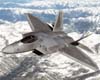
A recent commentary by William Hartung appearing in UPI's Outside View column, "Saving Lockheed Martin," is based on flawed assumptions about the nature of U.S. foreign military sales as well as inaccuracies concerning Lockheed Martin programs. Contrary to what is implied by the commentary, the F-22 is a transformational combat aircraft designed and built for one customer only -- the U.S. Air Force. By U.S. law, the F-22 cannot be marketed to any non-U.S. customer, Japan included. |
|
|
| The content herein, unless otherwise known to be public domain, are Copyright Space.TV Corporation. AFP and UPI Wire Stories are copyright Agence France-Presse and United Press International. ESA Portal Reports are copyright European Space Agency. All NASA sourced material is public domain. Additional copyrights may apply in whole or part to other bona fide parties. Advertising does not imply endorsement, agreement or approval of any opinions, statements or information provided by Space.TV Corp on any Web page published or hosted by Space.TV Corp. Privacy Statement |