
 |
 |
 |
 |
 |
 |
 |
 |
 |

 |

Esrange, Sweden (SPX) Mar 30, 2011 The TEXUS 49 sounding rocket lifted off from the Esrange Space Center near Kiruna in northern Sweden on 29 March 2011 at 06.01 CET. The German Aerospace Center (DLR) rocket, carrying four German experiments for medical and materials research, reached an altitude of 268 kilometres. The experiments were subjected to close to six minutes of microgravity during the twenty-minute long flight before the payloads were parachuted back to Earth, as scheduled.
Alloys in microgravity The second experiment examined a nickel-tantalum alloy with ceramic particles, which were added to improve the composite's wear characteristics. The results obtained in the microgravity environment are more accurate than those obtained in a laboratory on Earth because the forces required to maintain the particles in suspension and the disruptive internal flows in the liquid metal are substantially reduced. The researchers obtained high-precision data that is important for the development of computer simulations required for modern industrial manufacturing processes. The TRACE+ (Transparent Alloys for Columnar Equiaxed Solidification) materials science experiment, performed by the Aachen ACCESS research centre, investigated the processes and structures involved in the solidification of metallic alloys. This was done by analysing the behaviour of a mixture of organic substances with a solidification process similar to that of a liquid metal. The transparency of the organic alloy made it possible to observe its solidification process directly. The experiment will yield data for improving industrial casting processes.
SITI-1 investigates the human immune system in microgravity In addition, cell cultures were carried on board TEXUS 49 to monitor the activity of all genes in the immune system using modern DNA chip technology. Scientists suspect that certain molecules in cell membranes may be responsible for disrupting the immune system in microgravity. If these suspicions are confirmed, the findings could eventually lead to new approaches for fighting diseases. DLR commissioned Astrium Space Transportation in Bremen for the launch preparations and implementation of the TEXUS 49 mission. Kayser-Threde in Munich and DLR's Mobile Rocket Base (MObile RAketenBAsis; MORABA) in Oberpfaffenhofen also participated in the mission. The VSB-30 two-stage launcher was a joint venture between the Brazilian aerospace organisations Centro Tecnico Aeroespacial (CTA) and Instituto de Aeronautica e Espaco (IAE), together with MORABA and the Swedish Space Corporation (SSC). This was its seventh launch from Esrange under the TEXUS programme.
The TEXUS programme Up to two rockets are launched from Esrange each year. Following a parabolic trajectory, they can reach an altitude of up to 270 kilometres before parachuting back to Earth and being recovered by helicopter. During the flights, experiments are performed in separate, autonomous modules within the launcher. Data is acquired using telemetry during the flight and upon recovery of the scientific payloads. The tests can be directly controlled and monitored via telecommanding and video transmissions. The TEXUS programme offers scientists the opportunity to perform independent experiments in microgravity and prepare experiments to be conducted on the International Space Station (ISS). It stands out for the re-usability of the payload, short preparation and access times, a regular, user-friendly access to zero gravity and, in comparison to manned missions, lower safety requirements. These factors allow for relatively low-cost research.
Share This Article With Planet Earth
Related Links Esrange Space Center Rocket Science News at Space-Travel.Com

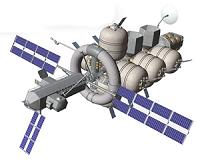 A Reusable Manned Deep - Space Craft
Bethesda MD (SPX) Mar 29, 2011 Almost a year after Launchspace contributing editors suggested an exploration vehicle that would take crews from low Earth orbit to many solar system destinations such as asteroids and lunar circumnavigation, NASA has come up with NAUTILUS-X, which stands for Non-Atmospheric Universal Transport Intended for Lengthy US space eXploration. The suggested NASA version is a tubular-looking space ... read more |
|
|
| The content herein, unless otherwise known to be public domain, are Copyright 1995-2010 - SpaceDaily. AFP and UPI Wire Stories are copyright Agence France-Presse and United Press International. ESA Portal Reports are copyright European Space Agency. All NASA sourced material is public domain. Additional copyrights may apply in whole or part to other bona fide parties. Advertising does not imply endorsement,agreement or approval of any opinions, statements or information provided by SpaceDaily on any Web page published or hosted by SpaceDaily. Privacy Statement |


 del.icio.us
 Digg
Digg Reddit
 YahooMyWeb
 Google
 Facebook


