
 |
 |
 |
 |
 |
 |
 |
 |
 |

 |
Teddy take-off: bears launched into space
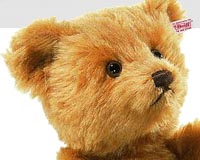
London (AFP) Dec 5, 2008 Four teddy bears, fully decked out in custom-made spacesuits, were launched to the edge of space this week as part of a British university experiment. Blasting off from Cambridge University's Churchill College on Monday, they were attached to a helium balloon and fitted with multiple cameras, a GPS receiver, flight computer and radio for the two-hour nine-minute flight, which saw them rise 30 kilometres (18.8 miles) above sea level. The spacesuits were designed by local schoolchildren, as part of a project to engage youths in science and engineering, organised by the Cambridge University Spaceflight student club. CU Spaceflight said the aim of the experiment was to find out which of the four spacesuits, each designed by a different group of students, best insulated the cuddly toys from the -53 degrees Celcius (-63 degrees Fahrenheit) temperatures. "We want to offer young people the opportunity to get involved in the space industry whilst still at school and show that real-life science is something that is open to everybody," said Iain Waugh, CU Spaceflight's chief aeronautical engineer. "High altitude balloon flights are a fantastic way of encouraging interest in science. They are easy to understand, and produce amazing results." A Cambridge University spokeswoman noted: "No treasured possessions were endangered in this experiment." Share This Article With Planet Earth
Related Links Space Tourism, Space Transport and Space Exploration News
 India, Russia sign nuclear energy, space deals
 New Delhi (AFP) Dec 5, 2008
Russia on Friday signed landmark accords with its traditional ally India on issues ranging from nuclear energy to space, as President Dmitry Medvedev met Indian leaders in a bid to bolster ties. |
|
|

| The content herein, unless otherwise known to be public domain, are Copyright 1995-2007 - SpaceDaily.AFP and UPI Wire Stories are copyright Agence France-Presse and United Press International. ESA Portal Reports are copyright European Space Agency. All NASA sourced material is public domain. Additional copyrights may apply in whole or part to other bona fide parties. Advertising does not imply endorsement,agreement or approval of any opinions, statements or information provided by SpaceDaily on any Web page published or hosted by SpaceDaily. Privacy Statement |
 del.icio.us
 Digg
Digg Reddit
 YahooMyWeb
 Google
 Facebook