
 |
 |
 |
 |
 |
 |
 |
 |
 |

 |
The Lure Of Launch Vehicles
Bethesda MD (SPX) Apr 14, 2009 About 12 years ago a Launchspace course attendee walked up to the instructor at the beginning of the three-day Launch Vehicle Systems Design and Engineering course. This attendee explained that he knew little about launch vehicles and did not have a technical background, but was very interested in the topic and wanted to learn all he could. The instructor said the course was technical in nature, but most of the material could be understood without having an engineering degree. The student decided to take the course. At the end of the three days the same student thanked the instructor and asked about the advisability of building large pressure-fed liquid rocket boosters in order to compete with other launcher options such as Atlas and Sea Launch. The instructor pointed out that large booster stages use pump-fed liquid rockets because the increased performance is needed to keep the stage masses and sizes down. Otherwise, the stages get very large and expensive, rendering them inefficient. Thus, pressure-fed stages cannot compete with existing stages for large launch vehicles. Alas, the student did not take that advice and proceeded to create a launch vehicle company to build large pressure-fed rocket stages to compete with existing vehicles. After spending three years and some $200 million, the company shut down operations and the student who loved launch vehicles gave up his dream. Many entrepreneurs have tried to succeed in this business, but none have yet reached that goal. There is a famous saying in the launch vehicle business: "If you want to end up with a million dollars in the launch business, start out with a billion." What is this lure that attracts so many to this business? It may be the thrill of sending something into space and being part of history-making activities. Or, maybe it is just the excitement of lighting off rockets. No one knows for sure. But, we do know that the launch vehicle business is usually a losing proposition. So, why do companies like Boeing and Lockheed Martin keep on building them? Share This Article With Planet Earth
Related Links Launch Space Rocket Science News at Space-Travel.Com
 NASA Selects Material For Orion Spacecraft Heat Shield
 Houston TX (SPX) Apr 14, 2009
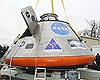
NASA has chosen the material for a heat shield that will protect a new generation of space explorers when they return from the moon. After extensive study, NASA has selected the Avcoat ablator system for the Orion crew module. |
|
|

| The content herein, unless otherwise known to be public domain, are Copyright 1995-2007 - SpaceDaily.AFP and UPI Wire Stories are copyright Agence France-Presse and United Press International. ESA Portal Reports are copyright European Space Agency. All NASA sourced material is public domain. Additional copyrights may apply in whole or part to other bona fide parties. Advertising does not imply endorsement,agreement or approval of any opinions, statements or information provided by SpaceDaily on any Web page published or hosted by SpaceDaily. Privacy Statement |

 del.icio.us
 Digg
Digg Reddit
 YahooMyWeb
 Google
 Facebook