
 |
 |
 |
 |
 |
 |
 |
 |
 |

 |

Toronto, Canada (SPX) Apr 20, 2011 Our susceptibility to oral infection has some parallels to those of ancient reptiles that evolved to eat a diet incorporating plants in addition to meat. That's according to Robert Reisz from the University of Toronto and his colleagues who found evidence of bone damage due to oral infec-tion in Paleozoic reptiles as they adapted to living on land. Their findings, published online in Springer's journal Naturwissenschaften - The Science of Nature, predate the previous record for oral and dental disease in a terrestrial vertebrate by nearly 200 million years. The researchers investigated the jaws of several well-preserved specimens of Labidosaurus hama-tus, a 275-million-year-old terrestrial reptile from North America. One specimen stood out because of missing teeth and associated erosion of the jaw bone. With the aid of CT-scanning, Reisz and colleagues found evidence of a massive infection. This resulted in the loss of several teeth, as well as bone destruction in the jaw in the form of an abscess and internal loss of bone tissue. As the ancestors of advanced reptiles diversified to life on land, many evolved dental and cranial specializations to feed more efficiently on other animals and to incorporate high-fiber plant leaves and stems into their diet. The primitive dental pattern in which teeth were loosely attached to the jaws and continuously replaced, changed in some lineages to be strongly attached to the jaw, with little or no tooth replacement. This was clearly advantageous to some early reptiles, allowing them to chew their food and thus improve nutrient absorption. The abundance and global distribution of Labidosauris and its kin attest to the evolutionary success of this strategy. However, Reisz and his colleagues suggest that as this reptile lost the ability to replace teeth, the likelihood of infections of the jaw, resulting from damage to the teeth, increased substantially. This is because prolonged exposure of the dental pulp cavity of heavily worn or damaged teeth to oral bacteria was much greater than in other animals that quickly replaced their teeth. The authors conclude: "Our findings allow us to speculate that our own human system of having just two sets of teeth, baby and permanent, although of obvious advantage because of its ability to chew and process many different foodstuffs, is more susceptible to infection than that of our distant ancestors that had a continuous cycle of tooth replacement. "ReferenceReisz R R et al (2011). Osteomyelitis in a Paleozoic reptile: ancient evidence for bacterial infection and its evolutionary significance. Naturwissenschaften - The Nature of Science. DOI 10.1007/s00114-011-0792-1
Share This Article With Planet Earth
Related Links University of Toronto Explore The Early Earth at TerraDaily.com

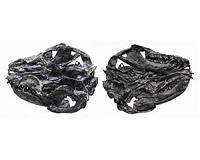 Long-Sought Fossil Mammal With Transitional Middle Ear Found
Washington DC (SPX) Apr 15, 2011 Paleontologists from the American Museum of Natural History and the Chinese Academy of Sciences announce the discovery of Liaoconodon hui, a complete fossil mammal from the Mesozoic found in China that includes the long-sought transitional middle ear. The specimen shows the bones associated with hearing in mammals- the malleus, incus, and ectotympanic- decoupled from the lower jaw, as had ... read more |
|
|
| The content herein, unless otherwise known to be public domain, are Copyright 1995-2010 - SpaceDaily. AFP and UPI Wire Stories are copyright Agence France-Presse and United Press International. ESA Portal Reports are copyright European Space Agency. All NASA sourced material is public domain. Additional copyrights may apply in whole or part to other bona fide parties. Advertising does not imply endorsement,agreement or approval of any opinions, statements or information provided by SpaceDaily on any Web page published or hosted by SpaceDaily. Privacy Statement |


 del.icio.us
 Digg
Digg Reddit
 YahooMyWeb
 Google
 Facebook


