
 |
 |
 |
 |
 |
 |
 |
 |
 |

 |
The Vicuna Is Back From The Brink In South America
Canberra, Australia (SPX) Jan 29, 2009 The success of international and local efforts to bring South America's llama-like Vicuna back from the brink of extinction holds valuable lessons for Australia, according to the co-author of a new book on the project, CSIRO's Professor Iain Gordon. "The Vicuna has seen a resurgence in its numbers due to the reintroduction of indigenous methods of fleece production," he says. "How that was achieved is particularly relevant to wildlife conservation efforts in Australia where close to half the mammal extinctions across the planet in the last 200 years have taken place." A relative of the llama, the Vicuna, was once abundant in the South American Andes. However, Vicuna numbers began to drop sharply in the 1960s due to international demand for their high quality fleeces which are the most valuable of any wild animal in the world. An international moratorium on the sale of Vicuna fleece was imposed in 1969 and populations recovered enough for a community-based conservation policy to be enacted in 1987. Professor Gordon's book, The Vicuna: The theory and Practice of Community Based Wildlife Management, follows the history of how the Vicuna was saved. "Indigenous communities in the Andes are reinstating traditional systems of managing the species," he says. "Reinstating the old Inca method of 'capture-shear-and-release' of wild populations, has enabled these communities to make a living from sustainable use of harvested fleece." He says Vicuna numbers are now back up, due to the international and indigenous communities' commitment to education and regulation. "The work has linked economic, social and conservation research to provide a unique insight into the viability of community-based wildlife management of a species which, until recently, was on the brink of extinction." The Vicuna is one of the few success stories of wildlife conservation worldwide. CSIRO continues to work with research partners to discover new ways of conserving biodiversity and supporting healthy ecosystems at local, regional and national scales. For example, CSIRO's Indigenous Livelihoods project is supporting the development of culturally appropriate employment and enterprise opportunities in natural resource management for Aboriginal and Torres Strait Islander communities in Australia. Share This Article With Planet Earth
Related Links CSIRO Indigenous Livelihoods project Darwin Today At TerraDaily.com
 How Does A Dog Walk? Surprisingly, Many Of Us Don't Really Know
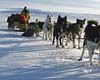 Budapest, Hungary (SPX) Jan 29, 2009
Despite the fact that most of us see our four-legged friends walking around every day, most of us-including many experts in natural history museums and illustrators for veterinary anatomy text books-apparently still don't know how they do it. |
|
|

| The content herein, unless otherwise known to be public domain, are Copyright 1995-2007 - SpaceDaily.AFP and UPI Wire Stories are copyright Agence France-Presse and United Press International. ESA Portal Reports are copyright European Space Agency. All NASA sourced material is public domain. Additional copyrights may apply in whole or part to other bona fide parties. Advertising does not imply endorsement,agreement or approval of any opinions, statements or information provided by SpaceDaily on any Web page published or hosted by SpaceDaily. Privacy Statement |

 del.icio.us
 Digg
Digg Reddit
 YahooMyWeb
 Google
 Facebook