
 |
 |
 |
 |
 |
 |
 |
 |
 |

 |

Paris (AFP) Nov 24, 2010 Thirty percent of tinned tunas tested in a dozen countries were mislabelled or had other irregularities, according to a new report based on genetic analysis. Some of the 50 brands sampled contained different species of tuna across the same product, or two different species in the same tin, an illegal practice in Europe. Some tins, for example, labelled as skipjack -- a plentiful tuna-like fish found in the Indian and Pacific oceans -- also had bigeye or yellowtail tuna, both species with declining populations. The independent report, commissioned by Greenpeace, was timed to coincide with the annual meeting of the International Commission for the Conservation of Atlantic Tunas (ICCAT), running in Paris through Saturday. ICCAT's 48 member states, including the European Union, are charged with ensuring the sustainability of fisheries in the Atlantic. "Tuna companies are indiscriminately stuffing multiple species of tuna, including juveniles of species in decline, into tins that shoppers rightfully expect to contain a sustainable product," said Greenpeace International oceans campaigner Nina Thuellen. The mixing of species and inclusion of under-sized tuna from over-fished stocks is due mainly to the use of so-called fish aggregation devices, or FADs, she said. These man-made floating objects -- some makeshift collections of flotsam, others high-tech constructs -- attract the fish in open seas, where they are then caught in huge, curtain-like draw nets. Endangered species of turtles and sharks also get trapped and die. Once in the freezers, identification and sorting of juveniles is very difficult, resulting in multiple species in the same tin. "Retailers must act now to immediately shift their business away from cheap tuna caught using FADs," Thuellen said, adding that the devices should be banned by ICCAT and other regional fisheries management organisations. Carried out by Spanish laboratory AZTI Tecnalia, the tests analysed canned tuna products from Austria, Australia, Greece, the Netherlands, New Zealand, Canada, Spain, Italy, the United States, Britain, Switzerland and Germany. At least five brands were tested in each country, totalling 165 different products. Five main species of tuna make up the annual worldwide catch of 4.0 to 4.5 million tonnes. Destined mainly for supermarket shelves, skipjack (Katsuwonus pelamis) accounts for 60 percent of the total. Yellowfin (Thunnus albacares) or bigeye (Thunnus obesus), both under pressure from industrial fishing, comprise 24 and 10 percent of the global tuna market respectively. Thunnus alalunga, better known as albacore, follows with five percent, while Atlantic Bluefin (Thunnus thynnus), highly prized in Japan, is less than one percent.
Share This Article With Planet Earth
Related Links Water News - Science, Technology and Politics

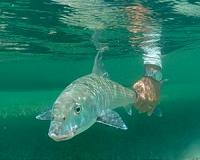 Fall Bonefish Census Sounds Warning Bell That Warrants Careful Future Monitoring
Miami FL (SPX) Nov 23, 2010 This October more than 60 guides and anglers in the Florida Keys poled across the flats from Biscayne Bay to the Marquesas, assisting in the annual bonefish census. This year's count, held in extremely difficult weather with lowered visibility, was down by 25-percent from an 8-year mean estimate of 316,805 bonefish to a new low of about 240,000 bonefish, according to Professor Jerry Ault, ... read more |
|
|
| The content herein, unless otherwise known to be public domain, are Copyright 1995-2010 - SpaceDaily. AFP and UPI Wire Stories are copyright Agence France-Presse and United Press International. ESA Portal Reports are copyright European Space Agency. All NASA sourced material is public domain. Additional copyrights may apply in whole or part to other bona fide parties. Advertising does not imply endorsement,agreement or approval of any opinions, statements or information provided by SpaceDaily on any Web page published or hosted by SpaceDaily. Privacy Statement |


 del.icio.us
 Digg
Digg Reddit
 YahooMyWeb
 Google
 Facebook


