
 |
 |
 |
 |
 |
 |
 |
 |
 |

 |
UBC Researchers Put A New Spin On Electrons
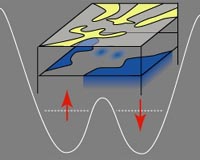
Vancouver, BC (SPX) Apr 20, 2009 In the first demonstration of its kind, researchers at the University of British Columbia have controlled the spin of electrons using a ballistic technique--bouncing electrons through a microscopic channel of precisely constructed, two-dimensional layer of semiconductor. It's the first time the intrinsic properties of a semiconductor-not external electric or magnetic fields-have been used to achieve the effect. The findings, published this week in Nature, could have implications for the development of so called 'spintronic' circuits: systems that use the directional spin of electrons to store and process data. "The need to use high-frequency external fields to control spin is one of the major stumbling blocks in using electrons for information processing, or in a spintronic circuit," notes Joshua Folk, principal investigator on the project and Canada Research Chair in the Physics of Nanostructures. "We show that the spin of electrons can be controlled without external fields, simply by designing the right circuit geometry and letting electrons move freely through it." The new technique uses the natural interactions of the electrons within the semiconductor micro-channel to control their spin--a technique that is a major step, but not yet flexible enough for industrial applications, notes Folk, an Assistant Professor with Physics and Astronomy who came to UBC via the Massachusetts Institute of Technology. Electronic systems that use the spin of an electron--a quantum mechanical property that comes in two varieties: up or down--would work similarly to today's transistors, but be smaller and use less energy. Presently, electrical charge alone is responsible for the logic functions in circuits. Power consumption by these circuits is the primary roadblock to faster, more powerful processors. A spintronic circuit has the potential to use less power by storing and manipulating a bit of information as electron spin. Spintronic circuits may also be a viable avenue for building quantum information processing devices. The exponentially faster processing possible with such a device could have applications ranging from code breaking, to dramatically improved drug design, to simulations of complex processes in molecular systems. Next steps by Folk and his team-working with colleagues at the Universit�t Regensburg in Germany-will include using new devices to gain more precise control over the alignment and trajectory of the electrons. Share This Article With Planet Earth
Related Links University of British Columbia Computer Chip Architecture, Technology and Manufacture Nano Technology News From SpaceMart.com
 Taiwan's TMSC and Intel team up on Atom processor
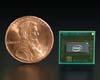 New York (AFP) March 2, 2009
Taiwan Semiconductor Manufacturing Co. and US computer chip maker Intel Corp. announced on Monday that they have forged an alliance that will allow TMSC to use Intel's tiny Atom microprocessors. |
|
|

| The content herein, unless otherwise known to be public domain, are Copyright 1995-2007 - SpaceDaily.AFP and UPI Wire Stories are copyright Agence France-Presse and United Press International. ESA Portal Reports are copyright European Space Agency. All NASA sourced material is public domain. Additional copyrights may apply in whole or part to other bona fide parties. Advertising does not imply endorsement,agreement or approval of any opinions, statements or information provided by SpaceDaily on any Web page published or hosted by SpaceDaily. Privacy Statement |
 del.icio.us
 Digg
Digg Reddit
 YahooMyWeb
 Google
 Facebook