|
 |
 |
 |
 |
 |
 |
 |
 |

 |
US Faces Burning Emissions Issue
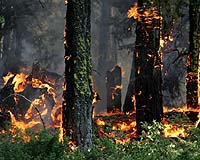
Boulder CO (SPX) Nov 02, 2007 Severe United States wildfires can contribute as much as vehicles to carbon emissions in some US states, although the amount is highly variable. New research published in the online open access journal Carbon Balance and Management quantifies these emissions and suggests fires will complicate emissions monitoring and modelling efforts. Christine Wiedinmyer of the National Center for Atmospheric Research and Jason Neff of the University of Colorado, both in Boulder, US, used satellite imaging data to determine the extent of fires over the period 2002-2006. They estimated the output of CO2 based on the degree of forest cover in a particular area. Typical annual emissions from fires are around 5 percent of the manmade total for the United States. However during major fires in the Western and Southeastern US, the proportion of fire contributions to CO2 emissions can increase dramatically. The authors note, "A striking implication of very large wildfires is that a severe fire season lasting only one or two months can release as much carbon as the annual emissions from the entire transportation or energy sector of an individual state." Although the release of CO2 in fires should be balanced over the long-term by the uptake of CO2 as new vegetation grows, the immediate impact of the fires on atmospheric CO2 is significant. This may create difficulties in accounting for carbon sources and sinks, and in assessing trends with current remote sensing technologies. Dr Wiedinmyer also warns, "There is a significant potential for additional net release of carbon from the forests of the United States due to changing fire dynamics in the coming decades." Although fire emissions are not currently included in most CO2 emission restriction agreements, increasing fire frequency and severity can lead to greater emissions of CO2 to the atmosphere and compound the problems that are related to manmade emissions. The fires include wild fires, prescribed burning and burning for agricultural purposes, but the majority of these emissions come from needle leaf forest fires in the western and southeastern States. Community Email This Article Comment On This Article Related Links BioMed Central Our Polluted World and Cleaning It Up
 Birth defects soar in polluted China
 Beijing (AFP) Oct 30, 2007
Birth defects in heavily polluted China have increased by nearly 40 percent since 2001, with a deformed baby born every 30 seconds, state media reported on Tuesday. |
|
|
| The content herein, unless otherwise known to be public domain, are Copyright Space.TV Corporation. AFP and UPI Wire Stories are copyright Agence France-Presse and United Press International. ESA Portal Reports are copyright European Space Agency. All NASA sourced material is public domain. Additional copyrights may apply in whole or part to other bona fide parties. Advertising does not imply endorsement, agreement or approval of any opinions, statements or information provided by Space.TV Corp on any Web page published or hosted by Space.TV Corp. Privacy Statement |