
 |
 |
 |
 |
 |
 |
 |
 |
 |

 |

Washington (AFP) May 5, 2011 Three weeks after the world marked 50 years since Russia's Yuri Gagarin became the first man to travel in space, the United States is honoring the American who followed him, Alan Shepard. Shepard was a 37-year-old naval pilot whose trip into space on May 5, 1961 aboard the Mercury 3 spacecraft made him a celebrated American hero. His 15-minute suborbital flight was much shorter than Gagarin's 108-minute journey in orbit, but provided a patriotic lift to America's efforts to explore outer space after losing to Cold War rival Russia in the race to be first. "It was not a very celebrated flight, but it was key for the US space program," said John Logsdon, former director of George Washington University's Space Policy Institute. The launch of Mercury's Freedom 7 mission was initially supposed to take place in March 1961 but was postponed due to technical problems. Gagarin blasted off from the south of the Soviet republic of Kazakhstan on April 12, 1961. "It is interesting to speculate on the impact if he would have been first, because it was Gagarin's flight that convinced (US president John F.) Kennedy to have the US enter the space race," Logsdon told AFP. Kennedy also feared the negative fallout that any failure might bring, particularly as the flight was broadcast on live television less than three weeks after the Bay of Pigs fiasco. "Kennedy was very concerned about Shepard's first flight in the aftermath of the failure of the Bay of Pigs," a botched CIA bid to invade southern Cuba, Logsdon said. "Some of his advisers suggested postponing the flight for some months... Others said: 'It's going to be a success, why postpone it?' And Kennedy took the risk of accepting that advice." Since Shepard's flight came just as Kennedy was about to decide whether to set US sights on exploring the moon by the end of the 1960s, the success of the trip provided a much-needed boost to those efforts. "This flight was very important for what followed," said NASA historian Stephen Garber. "It was a kind of proof of concept," he told AFP. "Gagarin was more a passive passenger and Shepard was able to control the capsule," demonstrating a "fundamental principle about space flight before Gemini and Apollo." Gemini was the second US program for manned spaceflight, and Apollo was the project that landed the first humans on the moon in 1969. American astronaut Neil Armstrong was the first to walk on the moon, but Shepard would make it there later, in 1971, as the commander of Apollo 14 on the third US mission to the moon. Shepard died in 1998 at the age of 74. A ceremony to mark the 50th anniversary of Shepard's flight will be held Thursday at Cape Canaveral, Florida, attended by NASA administrator Charles Bolden, Shepard's family and a former Mercury astronaut, Scott Carpenter. The US postal service is also unveiling two new stamps dedicated to the first US spaceflight.
Share This Article With Planet Earth
Related Links Space Tourism, Space Transport and Space Exploration News

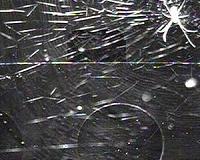 Spiders in Space - The Sequel
Houston TX (SPX) May 02, 2011 The very idea of spiders in space brings to mind campy, black and white horror films involving eight-legged monsters. In actuality, it is a scientific investigation called Commercial Generic Bioprocessing Apparatus Science Insert-05 or CSI-05, in which researchers observe arachnid habits in a microgravity environment. This is the second spider investigation on the International Space Stati ... read more |
|
|
| The content herein, unless otherwise known to be public domain, are Copyright 1995-2010 - SpaceDaily. AFP and UPI Wire Stories are copyright Agence France-Presse and United Press International. ESA Portal Reports are copyright European Space Agency. All NASA sourced material is public domain. Additional copyrights may apply in whole or part to other bona fide parties. Advertising does not imply endorsement,agreement or approval of any opinions, statements or information provided by SpaceDaily on any Web page published or hosted by SpaceDaily. Privacy Statement |


 del.icio.us
 Digg
Digg Reddit
 YahooMyWeb
 Google
 Facebook


